


When the New Year rolls around, most of our home organization plan is centered around cleaning up the holiday mess. But once our usual routines pick up once more, things can fall out of order once again. Most of the time, this is not for a lack of discipline but for a lack of a sustainable home organization plan.
In this guide, we’ll show you how to create a sustainable and realistic home declutter plan that supports your daily habits and keeps your home organized long after January ends.
Defining a Home Organization Plan That Works Long-Term
In contrast to a weekend clean-up plan which focuses on visible results, effective long-term home organization plans focus on decisions, systems, and habits. This approach creates structure that holds up through busy weeks, seasonal changes, and life transitions.
That structure starts with a realistic plan to reduce clutter.

Step 1: Create a realistic home declutter plan
One of the biggest mistakes people make when decluttering is assuming there is a “right” way to do it. In reality, organization is deeply personal. What works well for one household may fail completely in another.
Cleaning habits, tolerance for clutter, schedules, and emotional attachment to belongings all vary. That’s why no home declutter plan is truly one size fits all. A realistic plan starts with
understanding how you naturally operate, not forcing yourself into a system that looks good on paper but feels hard to maintain.
To give you an idea of the different ways you can declutter or organize your home, here are some of the most common approaches and what they are designed to approach.
Best methods to organize your home
-
KonMari method
The KonMari method skyrocketed into popularity back in 2011 after Mari Kondo published her book “The Life Changing Magic of Tidying Up.” This method focuses on keeping items that “spark joy” and decluttering by category rather than by room. And it works well for people who enjoy reflection and emotional clarity. However, It can feel overwhelming for those who prefer quick, practical decisions or limited time blocks. -
The ski slope method
Created by therapist turned interior designer Anita Yokota, this method urges you to treat a messy room like a ski slope. Start at the top of the space and move side to side as you head to the bottom, clearing one visible layer at a time.This gives you a structured route to follow and suits people who feel motivated by visual progress and need to see results quickly.
-
Swedish death cleaning
This may sound morbid but the Swedish death cleaning method encourages decluttering with long-term thinking in mind. The original intention behind this approach is for those in their later life stages to reduce the burden for their loved ones once they’ve passed on. But anyone of any age and stage in life can use the principles behind it.Compared to other decluttering methods, this one is more wide-scale. However, it can be a long and thorough process, so it might be best for those who have the time, energy, and patience to undertake the project.
- The four box method
This method is one of the simplest approaches and is best for those just starting out their decluttering journey or those cleaning small spaces. All you have to do is sort items into keep, donate, sell, or discard boxes.It’s all straightforward, however, you have to create your own parameters to guide you through the decision making process.
-
The packing party
If you’re dead set on truly drawing a line between your essentials and your clutter, The Minimalists’ Packing Party method might work for you.This method involves placing your belongings into boxes as if you’re about to move places. Once they’re all in, that’s when you remove your daily necessities such as your work clothes or toothbrush. After a few weeks, you can look back at the items you’ve pulled out and those that you’ve left inside. Then, you can decide which ones to get rid of, sell, or donate.
It paints a clear picture of your needs, however, it doesn’t consider all your items such as seasonal belongings and important paperwork that you might not have immediate need for.
How to find a decluttering method that fits your lifestyle
Instead of asking which method is best, ask which method feels manageable. Here are a few tips to consider:
- Pay attention to how you make decisions: Do you prefer clear rules, visual results, or structure and limits?
- Take your schedule into account: A plan that requires long sessions may fail if your time is limited. A slower approach often leads to better consistency and less burnout.
- Consider how your home is used: Busy households, shared spaces, and limited storage can all affect the success of your organizational plan.
Remember, a realistic home declutter plan should adapt to your habits, your space, and your priorities. Only then can it become sustainable for the whole year.
Step 2: Build systems that match how you actually live
Once the initial clean-up process is done, the next question becomes “How can I maintain this year-round?” The answer is not found in products or rules but in how your household already functions.
You have to design a customized system that can survive routine, repetition, and change. Here are some tips to help you create your own system:
-
Understand how your things move through your home
Items arrive, get used, and leave again. When systems ignore this flow, clutter returns. So, instead of asking where things should live, observe how they move:- Where do items enter your home?
- Where do they get used most often?
- Where do they naturally pause?
These points of movement reveal where your home organization plan needs support. It also gives you the exact location points where storage is best placed to make your home reset easier to maintain.
- Let daily frequency shape your storage placement decisions
A smart system isn’t just about where things live but also how often they are used. Items you interact with every day should be placed where access requires minimal effort, ideally within arm’s reach of where you actually use them. Items used weekly or monthly can live slightly further out of the way.
For example, everyday dishes and mugs should be stored near the coffee maker or breakfast station so your body doesn’t have to search before use. Meanwhile, seasonal decorations can be stored higher up in a closet or in a storage unit because they are not needed regularly.
This doesn’t just make retrieval easier but it also reduces the friction between intention and action, so your brain doesn’t invent excuses not to put things away.
- Design your system for reset, not perfection
Many people sabotage their own systems by treating organization like a one-time project with a perfect end state, rather than a living structure that supports imperfect, real life. But perfection-based systems can fall apart at the first disruption while reset-focused systems are more resilient and can be restored quickly when things go off track.
So, instead of aiming to eliminate the mess entirely, design a system so you can clear the space quickly, even when you are tired or rushed. A few tips you can follow include:- Create clear boundaries in your spaces: This can come in the form of a tray on top of your coffee table, a bin inside a cabinet, or separated zones for your everyday use items in the kitchen.
- Create simple return rules: Instead of overcomplicating your tasks such as “Sort your mail into categories before storing them” or “Put this away only after cleaning it properly,” try simplifying them. This can sound like “mail goes in this bin” or “bags hang on this rack.” These only take a few minutes and very little effort to do.
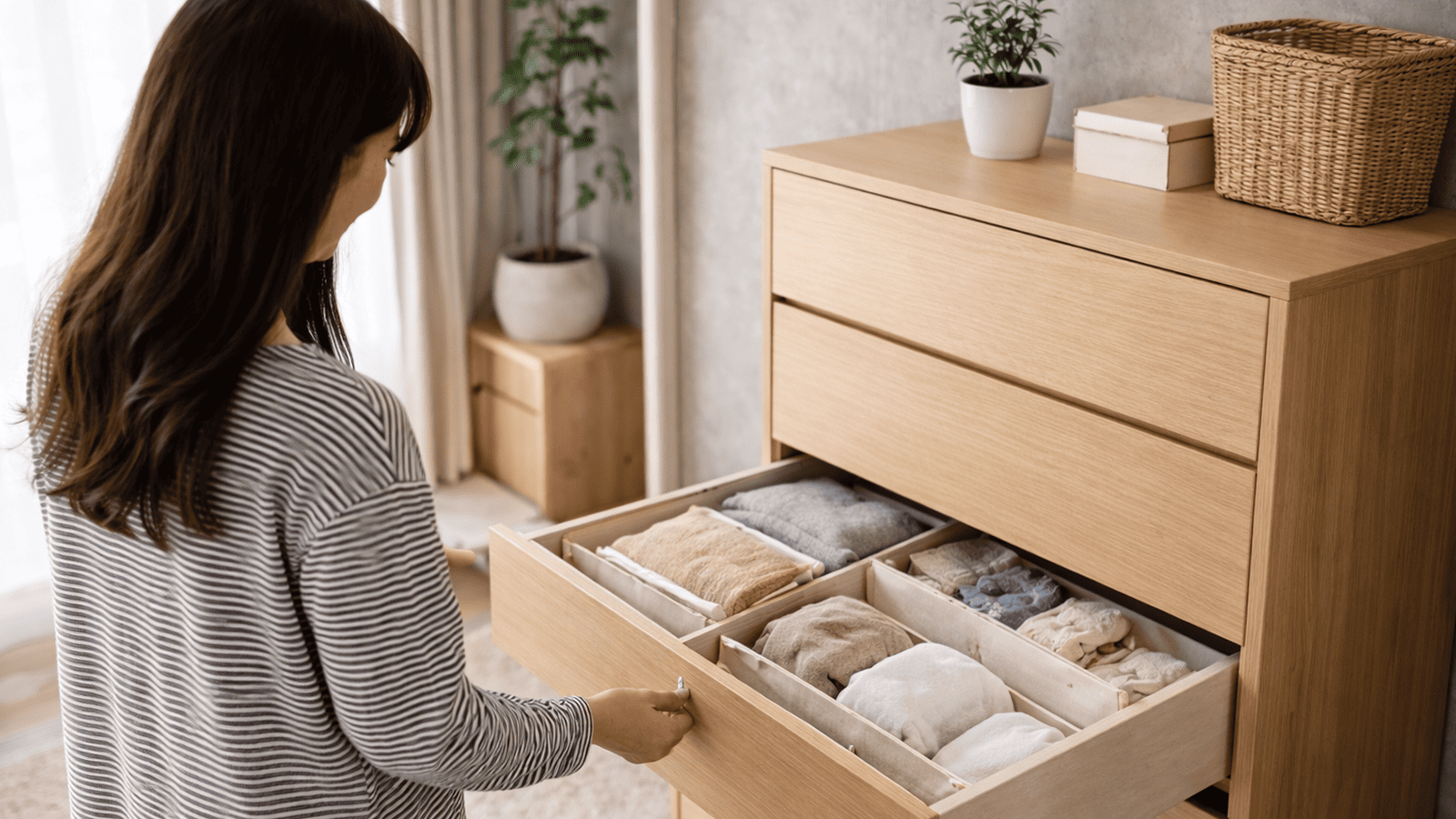
- Create a buffer space: A buffer space is intentional leftover space that can absorb life’s messiness. This can be a drawer that’s only 70% filled, a closet with extra hangers, or a storage bin with extra space. This gives you grace during imperfect moments but still lets you keep a semblance of organization in your home.
- Evaluate the effectiveness of your system based on effort rather than appearance
Seasons, schedules, and needs will shift and your systems need to adapt with it. But when evaluating what needs to change, judge it by how effortlessly you can continue to maintain it rather than by how beautifully labeled and aesthetic it looks.
Ask yourself the following:
- How long does it take to reset this space?
If it takes more than a couple minutes, it’s too complicated. - Does this space feel natural to use, or does it cause hesitation?
Hesitation = resistance = eventual clutter. - Can this system survive a busy week without falling apart?
If not, resilience should guide your redesign.
- How long does it take to reset this space?

Step 3: Focus on consistency
Consistency means building lightweight habits that prevent clutter from building back up to an overwhelming level. The goal is to keep your systems working with your life, not competing against it. Here are some ways to do that:
- Use monthly micro-resets to stay on track
Monthly micro-resets are short, focused check-ins that help you recalibrate without starting over. Think of them as routine maintenance so your systems remains functional. - Schedule seasonal check-ins, not full overhauls
These check-ins prevent your home from becoming a storage unit for everything you might need someday, which is where clutter quietly returns. - Revisit systems when friction appears
Friction is a signal to adjust your system rather than abandon it. When you experience these, you might need small tweaks, like changing container size, relocating frequently used items, or simplifying categories, can restore ease.
When a home organization plan needs extra space
Even the best home organization ideas have limits. When your home starts pulling double duty as long-term storage, systems become strained and resets take more effort than they should.
This is where local self storage can become a strategic extension of your home organization plan. Using a nearby, affordable self storage solution allows you to:
- Store seasonal and rarely used items off-site
- Protect your daily living spaces from overflow
- Maintain buffer space inside your home
- Reduce visual clutter without permanent decisions
Items like holiday décor, archived paperwork, extra furniture, and sentimental belongings can live safely outside your home, while still remaining accessible.
With modern and accessible storage providers like Stuf Storage, local access means you’re not “losing” items, you’re simply giving them a better home until they’re needed again. This keeps your primary living spaces lighter, calmer, and easier to reset.
Start Your Year With a Home Organization Plan That Actually Lasts
When your systems reflect your habits, your routines feel lighter. When consistency replaces perfection, your home becomes easier to reset even during busy seasons. And when space is used intentionally, organization stops feeling like a constant battle.
If part of staying organized means creating more breathing room at home, local self storage can be a smart extension of your plan. Stuf Storage offers affordable self storage solutions that help you protect your space, reduce visual clutter, and keep your home working for you all year long.
Make this the year your organization finally sticks and let Stuf Storage support you every step of the way. Discover available locations today!


.png)
%20(1).png)