%20(1)-1.png?width=1038&height=318&name=image%20(29)%20(1)-1.png)

That $200/month unit in San Francisco probably costs closer to $240 once you factor in admin fees, required insurance, and the rate increase that arrives 60 days after move-in. Storage facilities list the base rate front and center. Everything else is in the fine print.
Here’s what self-storage in San Francisco actually costs — and what that number includes.
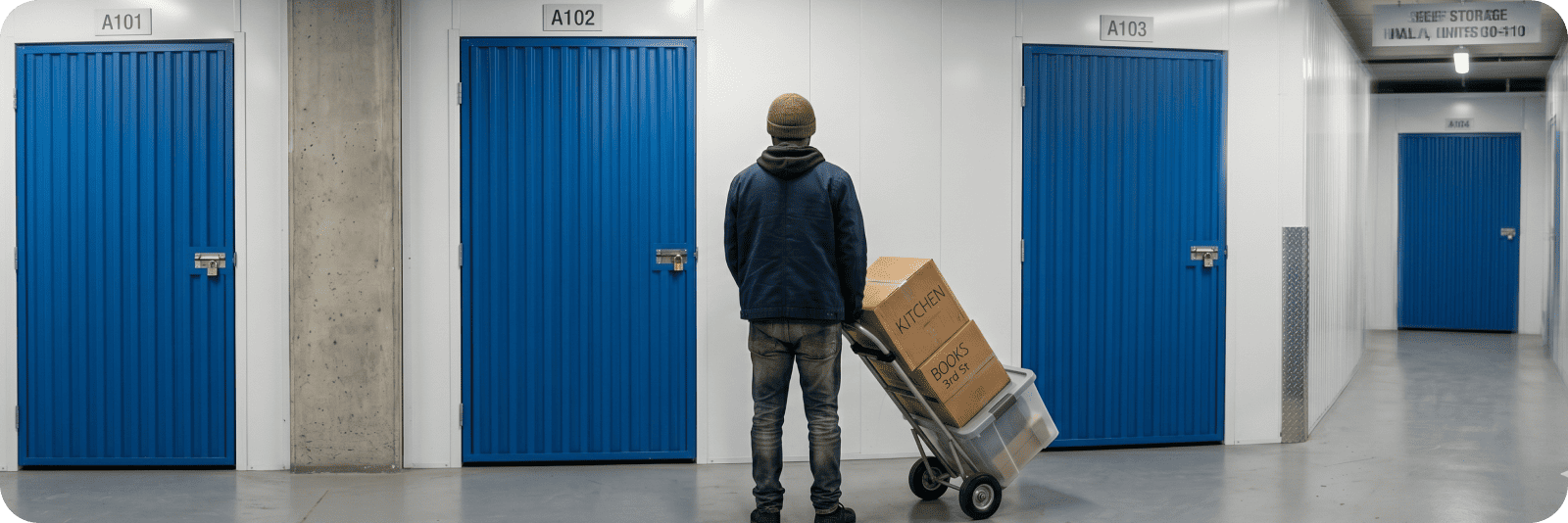
Self-Storage Prices in San Francisco by Unit Size (2026)
Standard non-climate-controlled units in San Francisco range from $79 to $524 per month across all unit sizes. Meanwhile, climate-controlled units average around $226.
Here's the full breakdown by size and type.
Average prices by unit size
Here's the average monthly street rates for non-climate-controlled units in San Francisco as of early 2026.
Do You Need Climate-Controlled Storage in San Francisco?
San Francisco's coastal climate is milder than most U.S. cities, but humidity is a genuine concern, especially for storage.
The city sits on a peninsula surrounded by water on three sides. Fog rolls in regularly, Bay air carries moisture, and temperatures stay cool year-round. Inside a standard storage unit, that moisture works its way into your belongings over the course of a few weeks.
Here's what that can look like for your items:
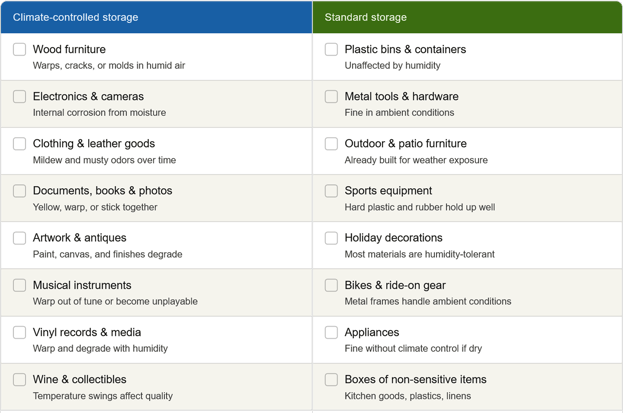
- Wood furniture warps, cracks, or develops mold
- Electronics corrode internally, even without visible damage
- Clothing and fabric collect mildew and musty odors
- Documents and photos yellow, warp, or stick together
- Musical instruments go out of shape and become unplayable
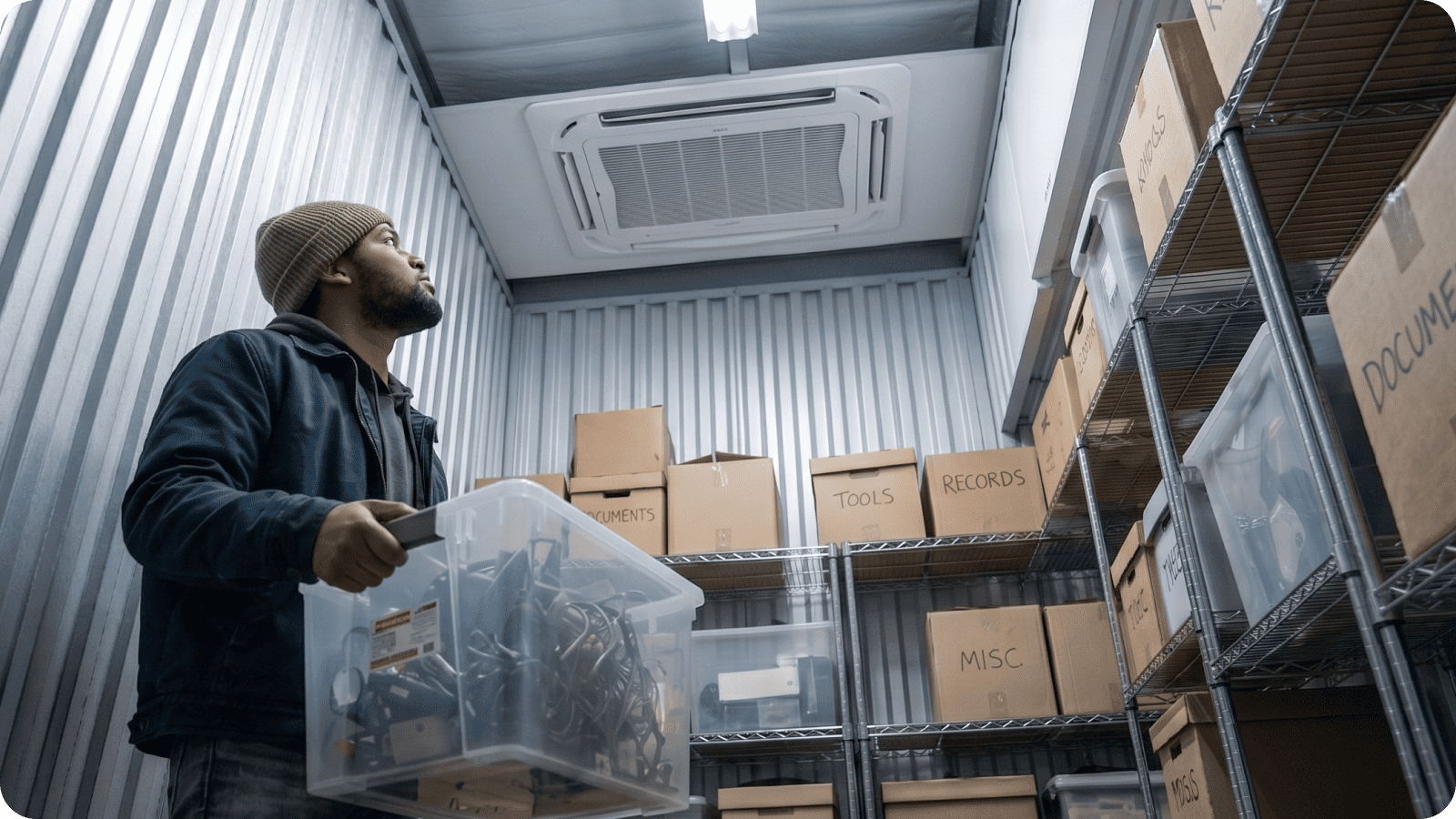
Climate-controlled units regulate both temperature and humidity year-round, keeping the environment inside the unit stable regardless of what's happening outside. That stability is what protects sensitive materials over time.
However, SF remains to be one of the most expensive cities for climate-controlled storage, according to StorageCafe’s latest data. The average price for climate-controlled units in SF is around $226 for all sizes. In comparison, the national average sits at $166.
That $60 difference is not a small gap.
Before paying that premium, run a quick check on what you're actually storing and if you truly need a climate-controlled storage unit.
Here’s a quick checklist of items you should store in climate-controlled self storage and what can remain in standard storage units.
Why Is Self-Storage So Expensive in San Francisco?
Three key factors drive the price for self-storage in SF.
- Real estate costs
Every storage facility pays for the space it occupies, and in San Francisco, that cost is steep.
Commercial asking rents in the city averaged $48.70 per square foot in Q1 2026. When the cost of operating in a city is that high, it gets passed directly to storage renters. - Limited supply
There are only 27 self-storage facilities in San Francisco, with roughly 4,700 units total across the entire city. For a dense urban population, that's a constrained market. This limited supply and consistent demand keeps prices elevated. - High renter concentration
San Francisco has over 222,000 renter-occupied households living in an average apartment size of around 650 square feet. These small spaces combined with a high-density population create persistent demand for storage.
One way to sidestep some of these cost drivers is to choose a storage provider that doesn't build new facilities.
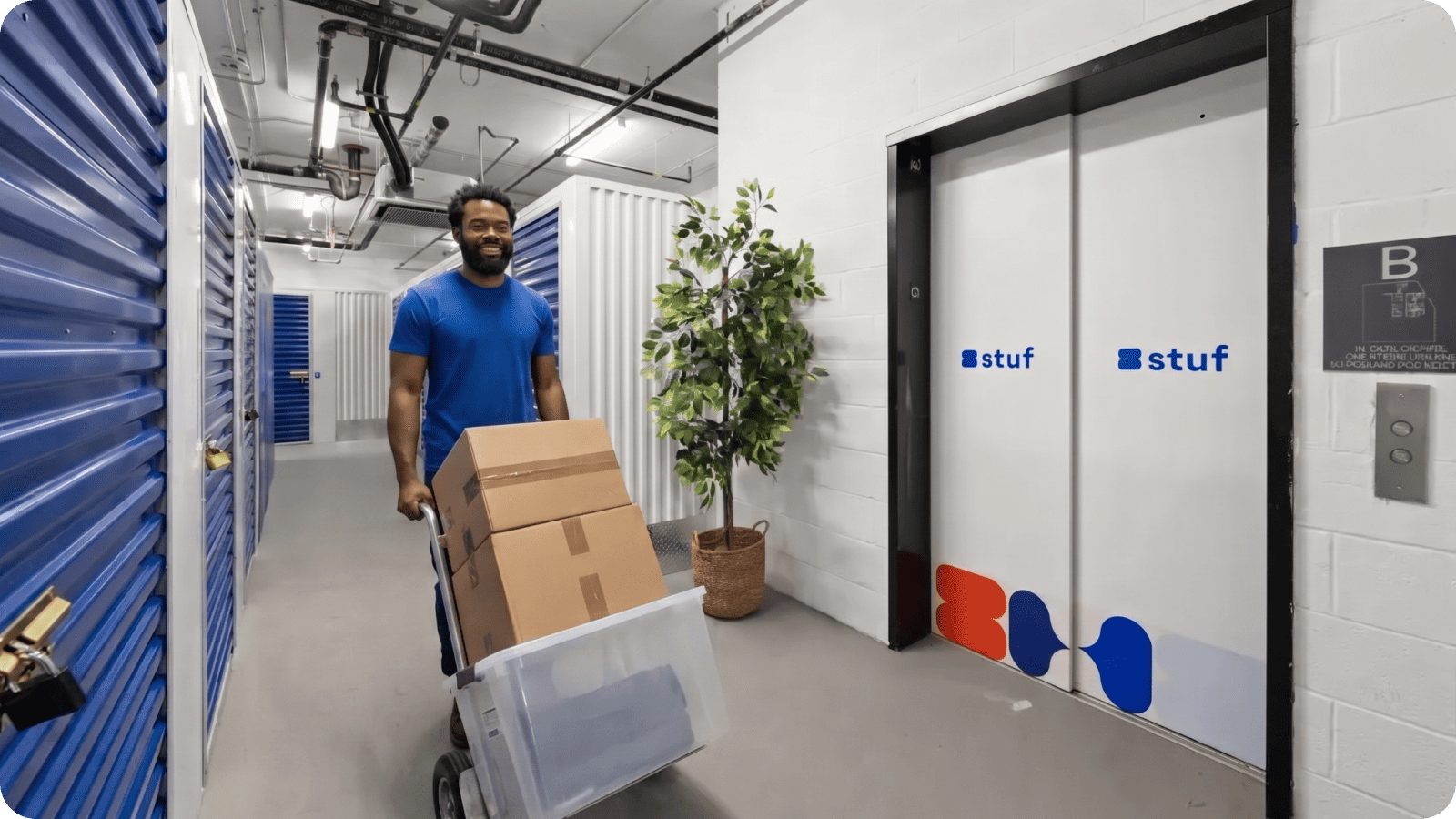
Stuf Storage, for instance, operates inside existing buildings. They convert underutilized space rather than constructing from scratch. That approach avoids the land acquisition and new construction costs that traditional storage operators carry, which can then reflect in what you’re paying them.
How San Francisco’s Neighborhood Locations Affect Your Self-Storage Costs
Where the facility sits in the city also makes a real difference in what you'll pay.
Neighborhoods with lower average street rates tend to be further from the densest residential areas.
For instance, Ingleside Heights averages around $194 per month, Inner Mission around $208, and Tenderloin around $223. On the higher end, Hunters Point averages around $397 per month.
However, for most SF renters, the cheapest unit across town is not necessarily the best value. Even if you have a car, driving across the city and finding parking near a storage facility adds inconvenience to every trip, and if you rely on transit, the trouble simply doubles.
While they may cost more, a unit you can reach on foot or by transit is worth every penny, especially if you plan to access it regularly.
What's Not Included in the Advertised Rate
A storage unit listed at $200 per month in San Francisco can realistically cost you $240–$260 once you account for everything else. That’s because storage facilities in San Francisco list their rates with the base monthly rate front and center and everything else in smaller print.
While that is not deceptive by itself, it creates a gap between the number you budget for and the number that actually hits your account.
Here's a breakdown of what typically gets added to your base rate.
-
Admin or setup fees
Some facilities charge a one-time administrative fee when you open an account. This is typically around $20–$30, but it's not always visible until checkout. - Lock fees
Many facilities require a specific lock and charge for it separately. Some refund it when you move out, some don't. - Insurance
Most facilities require proof of insurance on your stored belongings. If you don't have a renters or homeowners policy that covers off-site storage, you'll typically be required to purchase the facility's own insurance plan. This is often $10–$20 per month added to your bill.
For some facilities, you may be able to provide your own insurance from a third party. - Promotional pricing
"First month free" and "$1 move-in" offers are common across the industry. These are specifically designed to draw renters in, however, the rate resets to the standard street rate (or sometimes higher) once the promo period ends.
Always check what the post-promo rate is before you sign. - Rate increases mid-lease
Month-to-month leases give facilities the right to raise rates, usually with a 30-day notice. But some facilities raise rates aggressively in the months after move-in.
Before signing, ask whether rates have increased in the past 12 months and by how much.
If you’re curious as to why these rates increase mid-lease, Stuf's guide on understanding storage rent increases can walk you through exactly how it works and what to look for in a lease.
California's SB 709, which took effect January 1, 2026, now requires storage facilities to disclose maximum rent increases in the first 12 months upfront in your rental agreement. That's a useful protection, but it only covers the first year.
The best way to protect yourself against rate increase surprises is to read and understand the lease before you commit.

5 Things to Check Beyond the Monthly Rate
Finding a storage unit in San Francisco that fits your budget is one thing, but finding one that fits your life is another.
Most SF renters deal with enough daily logistics already. A unit that's technically affordable but requires a 40-minute Muni ride and is only open until 6pm is adding another problem to the mix.
So, here are the features you should factor into your decision alongside the price.
- Access hours
Many traditional storage facilities have restricted access hours with some as narrow as 9am to 6pm on weekdays.
If you work during those hours, you may have almost no practical access to your unit. Look for facilities with 24/7 access or extended hours that actually fit your schedule. - Transit proximity
San Francisco consistently ranks as one of the best U.S. cities for living without a car, and many renters in the urban core rely on transit, biking, or walking as their primary way of getting around.
A facility you can reach on foot or by Muni without hauling boxes across multiple transfers is a significant practical advantage for these renters.
It’s the same even for residents who do own a car but don't want to deal with city parking every time they need to access their unit. - Entry system
Keyless, app-based access means no front desk visits, no key to lose, and no coordinating with staff for entry. It also means you can access your unit on your own schedule.
Stuf uses this system across all its San Francisco locations.
Want to learn more about how keyless storage works and its advantages? Check out our guide on how the keyless storage system works.
- Security
Look for video surveillance, individually alarmed units, and electronic gate access.
While crime in general has decreased city-wide in SF, theft remains to be one of the city’s biggest concerns, which makes security a top factor you need to consider when choosing a self-storage facility. - Lease terms
Month-to-month leases give you flexibility while long-term contracts lock you in and often come with penalties for early exit.
If your situation is likely to change such as when you move or pivot in your business, the best choice is to stay month-to-month.
How to Find the Right Storage Unit in San Francisco
Storage costs in San Francisco run high, and the listed rate is rarely the full picture. The best thing you can do is go in with the right questions:
- What's the post-promo rate
- What fees sit outside the monthly price
- Have rates gone up recently.
Every facility will answer those questions differently. The right choice depends on what matters most to you whether that be price, proximity, access, flexibility, or a combination of all four.
If transparent pricing, month-to-month leases, and app-based access are high on your list, Stuf has locations across San Francisco worth looking at.
Take a look at our available units in San Francisco now.
If you have any questions, you can reach out to our team by sending us an email to info@stufstorage.com or giving us a call at (833) 380-7883.

.png)
.png)