


Lost keys rarely feel like a serious business risk until they trigger a security incident, inventory loss, or compliance issue. In the US, access-related failures remain a common contributor to property loss claims, particularly in facilities that rely on shared physical keys. When access cannot be tracked, businesses absorb the liability.
Keyless storage changes that equation. By replacing physical keys with digital access credentials, businesses gain control, traceability, and accountability over who enters storage areas and when. This shift reduces operational risk while strengthening security and compliance in a measurable way.
But is it truly worth the switch?
This article explains how keyless storage works, why physical keys expose businesses to unnecessary liability, and how digital access systems help protect assets at scale.
What Is Keyless Storage and How Does Digital Access Work?
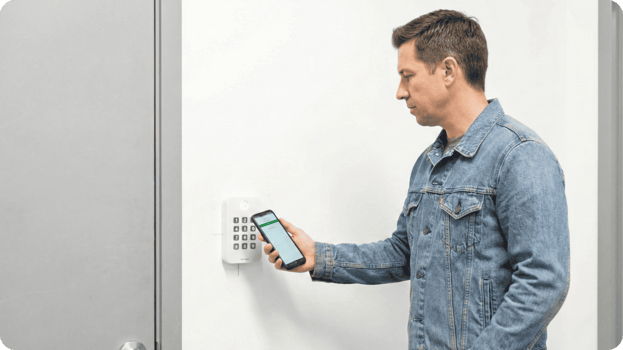
At its core, keyless storage or what is sometimes referred to as smart storage combines hardware (smart locks, sensors, or access readers) with software (a centralized access management platform). So, instead of unlocking doors or storage units with metal keys, authorized users gain entry through secure, software-managed systems. These systems verify identity electronically and record every access event.
For instance, at Stuf Storage, our users can access their self storage units through the company's web-based platform.
Once a user books a unit online, they are given credentials for their Stuf member portal. When they’re near their unit’s door, they can use their Stuf digital key to unlock their unit from their phone. Through this system, there is no app download, codes, or physical keys required.
How Keyless Storage Eliminates Lost Keys and Not Just Reduces Them
Keyless storage eliminates the problem at its root by removing physical keys entirely and replacing them with digital credentials that can be managed, tracked, and revoked instantly.
Below is a clear breakdown of how this works and why the impact on lost-key issues is far greater than most businesses anticipate.
- Physical keys are a persistent source of loss and risk
Physical keys are designed around possession. If someone holds the key, the system assumes they are authorized. This design creates several predictable problems:
- Keys are easy to misplace or leave behind.
- Duplicate keys can be made privately with no audit trail.
- When a key is lost, the only secure solution is to rekey or replace locks, which incurs cost and downtime.
Industry reporting on key management shows how common these problems are. For example, in sectors such as property management, 61 % of property managers report ongoing key issues that affect operations and satisfaction.
- Keyless credentials remove the physical object that gets lost
With smart storage, there is no physical key to lose in the first place. Instead, every authorized user holds a digital credential, such as:
- Mobile app access tied to an individual identity
- Encrypted keycards or key fobs
- Unique PIN codes or password credentials
If a credential becomes compromised or misplaced, it can be deactivated instantly through the system’s management dashboard without changing locks or issuing new hardware.
This capability stops lost-key issues before they become a security gap and eliminates expensive reactive solutions like calling a locksmith.
- Instant revocation and control prevent unauthorized use
Even when a key is lost, the risk comes not just from losing the object but from the unknowns: Who might find it? When will it be used? Physical keys carry no built-in accountability.
With keyless storage, administrators can:
- Revocate access in seconds
- Restrict permissions to specific areas
- Adjust credentials remotely
- Issue temporary credentials for contractors or visitors
These capabilities virtually eliminate unauthorized access due to lost credentials.
- Audit trails provide a record that keys never could
Traditional keys leave no record of where they have been or who used them. On the other hand, keyless systems log every access event, including who entered, where, and when.
This provides two important benefits:
- Security insights: If there is a question about access, you can verify it instead of guessing.
- Operational clarity: Management can see patterns in access events that were previously invisible.
This transparency makes lost credentials far less costly because you can assess the impact immediately and take action without disruption.
 How Can Businesses Benefit from Keyless Self Storage
When businesses move to keyless self storage, the biggest gains appear in areas that rarely get attention until something breaks, including operating costs, access governance, and organizational control.
Let’s explore these benefits closer below:
Reduced cost leakage across facilities and operations
Physical key systems create ongoing, distributed costs. These costs often sit across facilities, security, and administrative budgets, which makes them hard to track and even harder to eliminate.
According to facilities management data, rekeying a single commercial lock in the US typically costs $75–$150, not including staff time or operational disruption. When keys go missing repeatedly, these expenses compound across locations.
Keyless self storage removes this recurring cost structure because access updates happen digitally rather than mechanically.
Over time, businesses experience fewer emergency service calls, less downtime, and lower maintenance overhead. Additionally, instead of reacting to access issues, teams shift to planned, predictable access management.
Keyless self storage removes this recurring cost structure because access updates happen digitally rather than mechanically.
Over time, businesses experience fewer emergency service calls, less downtime, and lower maintenance overhead. Additionally, instead of reacting to access issues, teams shift to planned, predictable access management.
Operational speed as a competitive advantage.
In many industries, access delays slow work. This can include waiting for keys, coordinating handoffs, or resolving access disputes which can also become more troublesome with business size.
Keyless self storage removes these friction points given that access can be granted instantly to the right people without interrupting operations. This speed matters in environments where timing affects productivity, such as logistics, construction support, retail back-of-house operations, and multi-tenant commercial storage.
Access governance becomes a managed system, not a guess.
Smart storage replaces informal access distribution with structured governance. Every permission is assigned intentionally, reviewed centrally, and removed when no longer needed. This model aligns with how businesses already manage digital systems such as email, software licenses, and internal tools.
As a result, access control becomes a documented process rather than an inherited habit. This clarity supports better internal controls and reduces operational ambiguity.
Better use of storage space and resources
Digital access systems generate usage data that physical keys never could. With that information, businesses can see how often storage areas are accessed, when peak usage occurs, and which spaces remain underused.
This data allows the business to make smarter decisions in regards to their storage use, including:
- Consolidating underused storage
- Adjusting access schedules
- Planning capacity based on actual demand rather than assumptions
Over time, this leads to more efficient use of real estate and storage assets, both of which carry significant cost in US markets.
A foundation for stronger risk and compliance management
From a business perspective, access control directly affects liability, insurance exposure, and audit readiness. When access is unclear, investigations slow down and disputes escalate.
Meanwhile, keyless self storage creates verifiable records that support internal reviews and external inquiries. This reduces uncertainty during incidents and strengthens a business’s ability to demonstrate due diligence.
Is Keyless Self Storage Safe?
Security is often the first hesitation businesses have when considering keyless storage. Replacing physical keys with digital access can feel like introducing a new risk. In practice, modern keyless systems are designed to reduce exposure, not increase it.
The reason comes down to control and visibility.
-
Digital access is easier to secure than physical keys
With keyless smart storage systems, access is tied to individual identities, not objects. Credentials can be encrypted, limited by time or role, and revoked immediately when no longer needed. This structure closes many of the gaps that physical keys leave open by default.
From a security standpoint, this ability to remove access instantly is one of the strongest protections a business can have.
And while smart storage systems do not remove the human element from security, it improves how businesses manage it.
-
Concerns about hacking vs real-world risk
Like any technology that relies on software, keyless access can be vulnerable if implemented poorly or left unprotected. However, the good news is that there are plenty of ways to secure systems against these threats.The most important is choosing a reliable software partner or installer. Having strong and secure systems in place from the get-go can already deter hackers who might be setting their sights on your company.
Second is to have all the necessary precautions and preemptive measures in place. When it comes to keyless storage, there are various defenses such as multi-factor authentication, encrypted communications, and regular updates and patches that can be put in place to deter any attacks.
With proper configuration and maintenance, digital access control can be more resilient than a mechanical key, which has no capacity for updates or adaptive security.
- What happens during power or connectivity issues
Enterprise-grade keyless storage systems account for this. Many include battery backups, local credential storage, or fail-safe mechanisms that allow access to continue during temporary disruptions. These safeguards ensure that operational continuity does not depend on constant connectivity.
Ready to Reduce Risk and Take Control of Your Business Storage Access?
As more US businesses move toward digital access systems, keyless storage is no longer an emerging concept. It is becoming the standard for organizations that want predictable operations and controlled access without unnecessary complexity.
If your business is evaluating keyless self storage as a way to eliminate lost keys and reduce liability, Stuf Storage offers secure, digitally managed storage solutions built for modern operations. With centralized access control and business-ready infrastructure, we can help your company protect assets while simplifying access management.


.png)
%20(1).png)