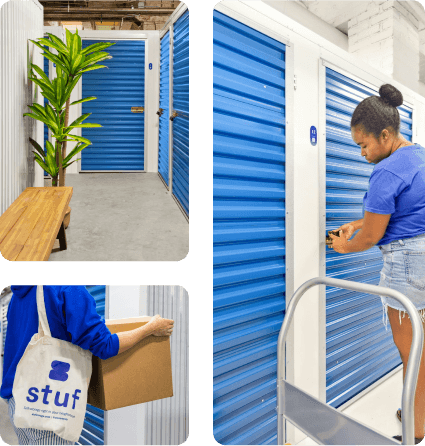


When October arrives and the temperature drops, can you find your winter coat in under a minute? Or is it buried under pool floats and a beach umbrella you forgot you owned?
A seasonal storage rotation system fixes that, a simple, repeatable method for cycling items in and out of storage based on the time of year. This guide shows you how to build one from scratch.
What is a Seasonal Storage Rotation System?
A seasonal storage rotation system is a structured process for cycling your belongings in and out of storage as the seasons change. Items you need in summer go back into storage when fall arrives. Same goes for your winter gear when spring hits.
The goal of this system is to ensure you have space to live and enjoy your life in your home throughout the seasons instead of being constantly buried under everything you own.
Active vs. Passive Storage: Why a Rotation System Wins
Most people store things but simply storing is different from having a rotation system.
Passive storage means items go in and rarely come back out in any organized way. On the other hand, a rotation system is active. It has a schedule, a structure, and a purpose.
Here's what changes when you switch from passive storage to a rotation system:
|
✗ Without a System
|
✓ With a Rotation System
|
|---|---|
| Every season change is a frantic search through mismatched boxes |
Each swap runs on a schedule. You know exactly what's coming out and when |
| Seasonal items sit in your living space year-round, taking up room you need |
Your apartment holds only what's relevant to the current season |
|
Items get damaged from improper |
Items are packed correctly and stored in conditions that keep them in good shape |
| Your storage unit becomes a dumping ground with no clear order |
Your storage unit is an organized extension of your home, not an afterthought |
|
Decluttering never happens because |
Each rotation is a natural checkpoint to reassess what you still actually need |
How to Build a Seasonal Storage Rotation System (Step-by-Step)
Step 1: Do a Full Seasonal Audit Before You Build Your System
Before you rotate anything, you need to know what you're working with. The best way to do this is through a seasonal audit. This is a one-time inventory of everything in your apartment that you only use part of the year.
Walk through each room with your phone's notes app open. As you scan your items, ask yourself, “Have I used this in the past three or four months?”
If the answer is no, that becomes a candidate for rotation.
Here’s a simple guide to help you.
What Counts as a Seasonal Item?
A good rule of thumb: if you use it fewer than four months a year, it belongs in your rotation system, not in your everyday living space.
Common seasonal categories include:
-
Clothing & accessories: winter coats, boots, scarves, gloves, swimwear, sandals, sun hats
- Bedding & home textiles: heavy duvets, flannel sheets, extra throw blankets, seasonal pillows
- Holiday décor: Halloween, Thanksgiving, Christmas, Hanukkah, and other seasonal decorations
- Recreational gear: skis, snowboards, camping equipment, bikes, beach bags, surfboards
- Sporting equipment: ice skates, sleds, sports gear tied to a specific season
- Small appliances used seasonally: fans, space heaters, humidifiers
After identifying your seasonal items, it’s best to further categorize them so they won’t end up in a dump pile in your storage. Here’s how you can do it:

The 3-Pile Method
- Rotate — Items you use seasonally and will cycle in and out of storage on your rotation schedule
- Store long-term — Items you rarely use but want to keep (a sentimental holiday item, backup bedding)
- Declutter — Items to donate, sell, or discard before the system begins
The third pile is the most important. A rotation system can only work well when you're only rotating things you actually need.
If you need a place to start with the declutter step, our Keep–Donate–Store guide will walk through the process in detail.
Step 2: Choose How Often You Cycle Your Items
There's no universal rule for how often to rotate. The right frequency depends on your lifestyle, your apartment size, and how many seasonal categories you're managing.
Twice a Year
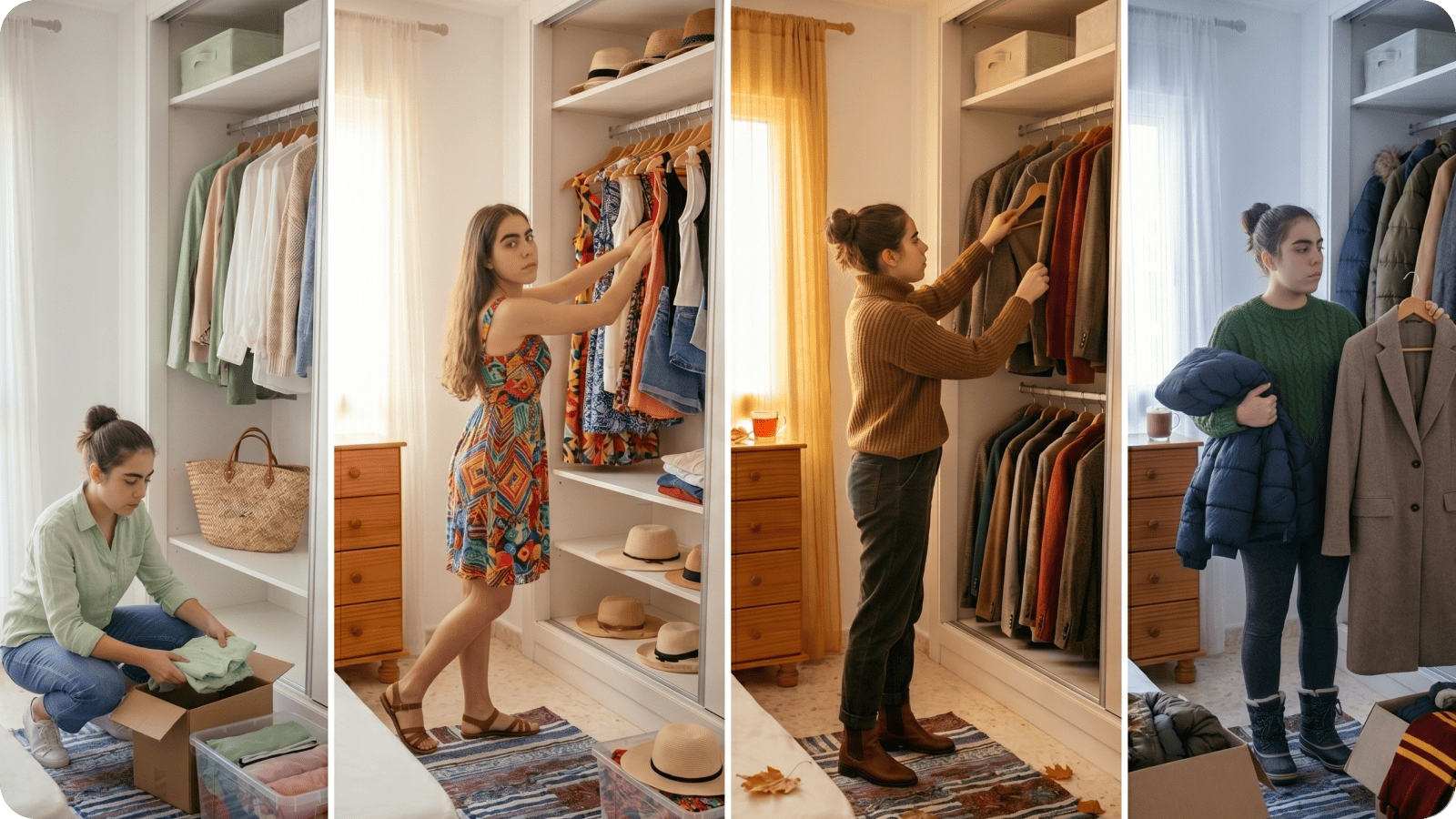
Most apartment renters rotate twice a year, once in spring and once in fall. These two points cover the biggest transitions: warm-weather items coming out in March or April, and cold-weather items coming back in September or October. For most people, this cadence is enough and easy to maintain.
Every Season
Some households benefit from rotating with each season meaning four times a year. This makes sense if you have a dedicated fall décor that's separate from your winter and Christmas items, or if you're managing gear for sports that change every few months (camping in summer, skiing in winter, running events in spring and fall).
So, before deciding on how many times you cycle your items ask yourself: what will I actually follow through on? A twice-yearly rotation you do consistently beats a four-times-yearly system you abandon after the first round.
Pro tip: Tie each rotation to something already on your calendar. For instance, pair your spring swap with your first clean after winter. Or pair your fall swap pairs with the first cold weekend of October.
When the rotation is attached to an existing event, it doesn't require willpower to remember.
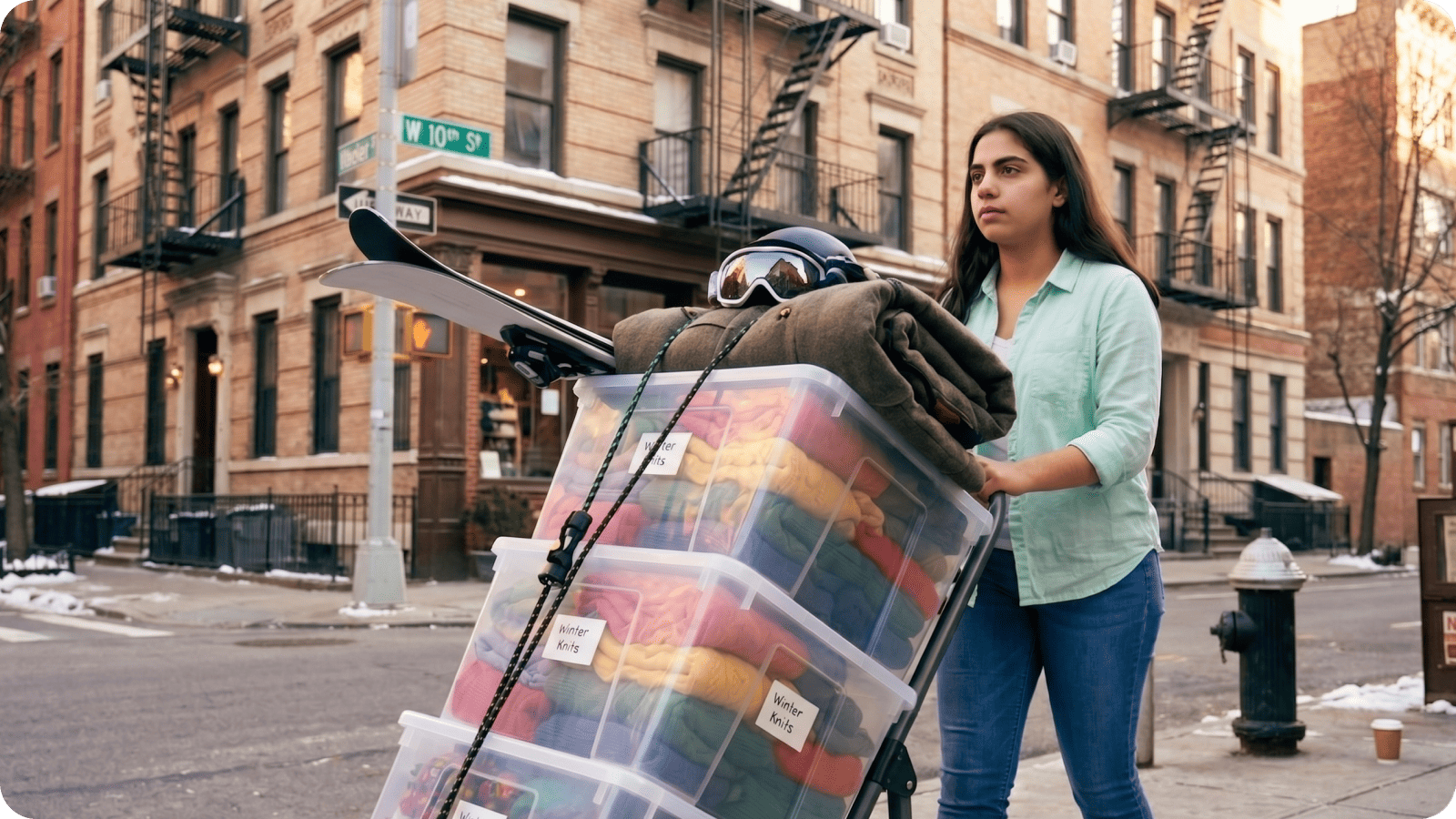
Here's what a twice-yearly rotation can looks like in practice for a New York apartment renter: In late March, winter coats, heavy bedding, space heaters, and boots go into the storage unit. Swimwear, fans, lighter bedding, and summer gear come out.
In early October, the process reverses with cold-weather items coming back into your home and warm-weather items going into your storage. Two Saturdays a year. That's the entire system.
Step 3: Set Up Your In-Home and Self-Storage Space
When you’re living in cities such as LA, San Francisco, and Washington DC, you won’t expect standard apartments to have dedicated storage rooms. This means that the storage you do have needs to work hard.
How You Can Make the Most of In-Apartment Storage
Before renting extra space, look at what you already have. Most apartments have at least one underused storage opportunity:
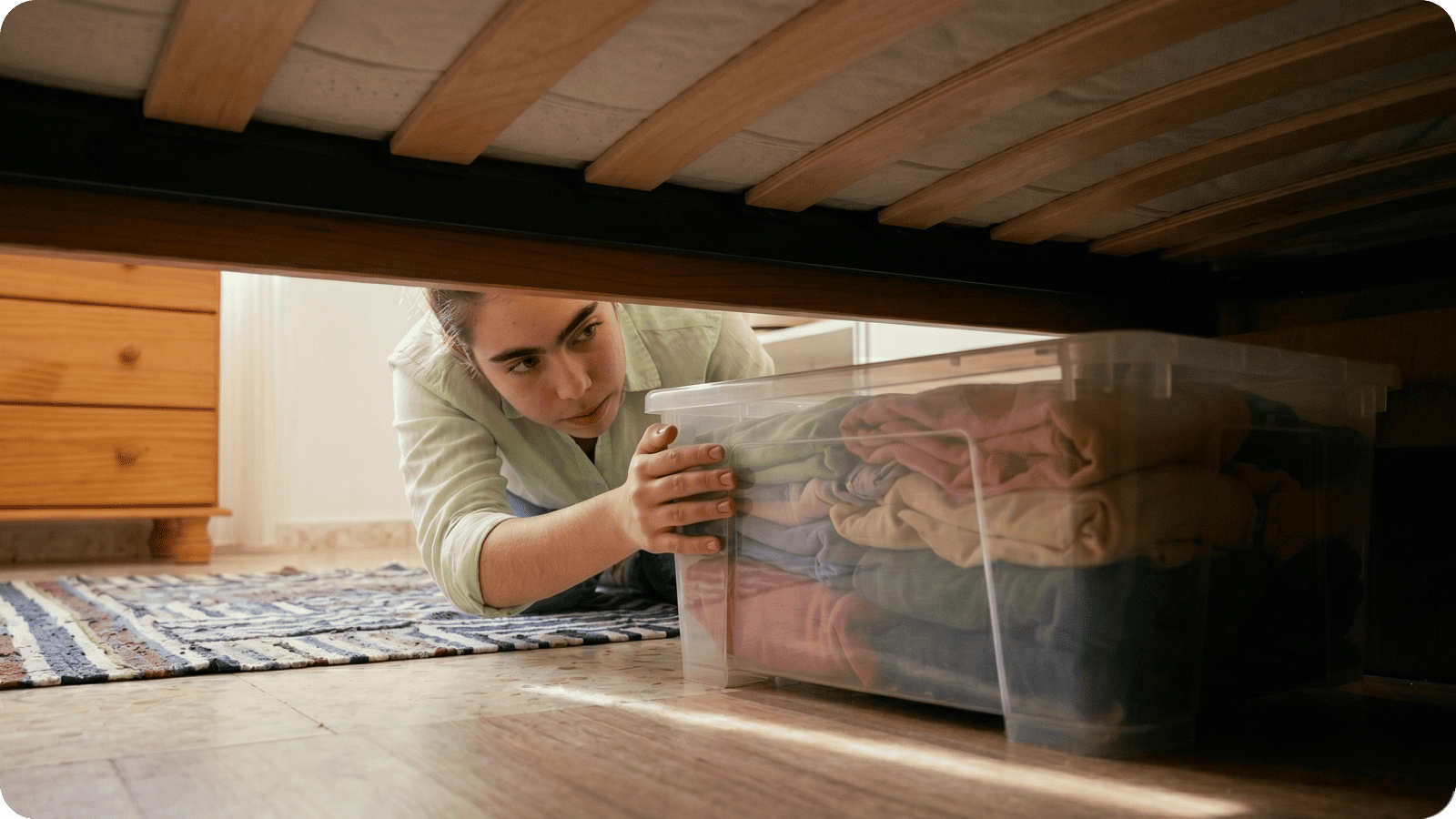
- Under-bed space: low-profile storage bins slide easily under most bed frames. This is ideal for off-season clothing and bedding you want to keep accessible
- Top closet shelves: bulky but lightweight items (extra pillows, folded sweaters) work well here when stored in clearly labeled bins
- Behind-door organizers: work for smaller seasonal accessories like scarves, gloves, and belts
- Vertical wall space: over-the-door or wall-mounted hooks can hold bags, coats, and gear without taking floor space
The limitation with in-apartment storage, however, is that while it handles small items well, it can't realistically hold bulky or large seasonal items, especially when you only have around 700 square feet of space to move around in.
For those items, you need a dedicated space outside your apartment.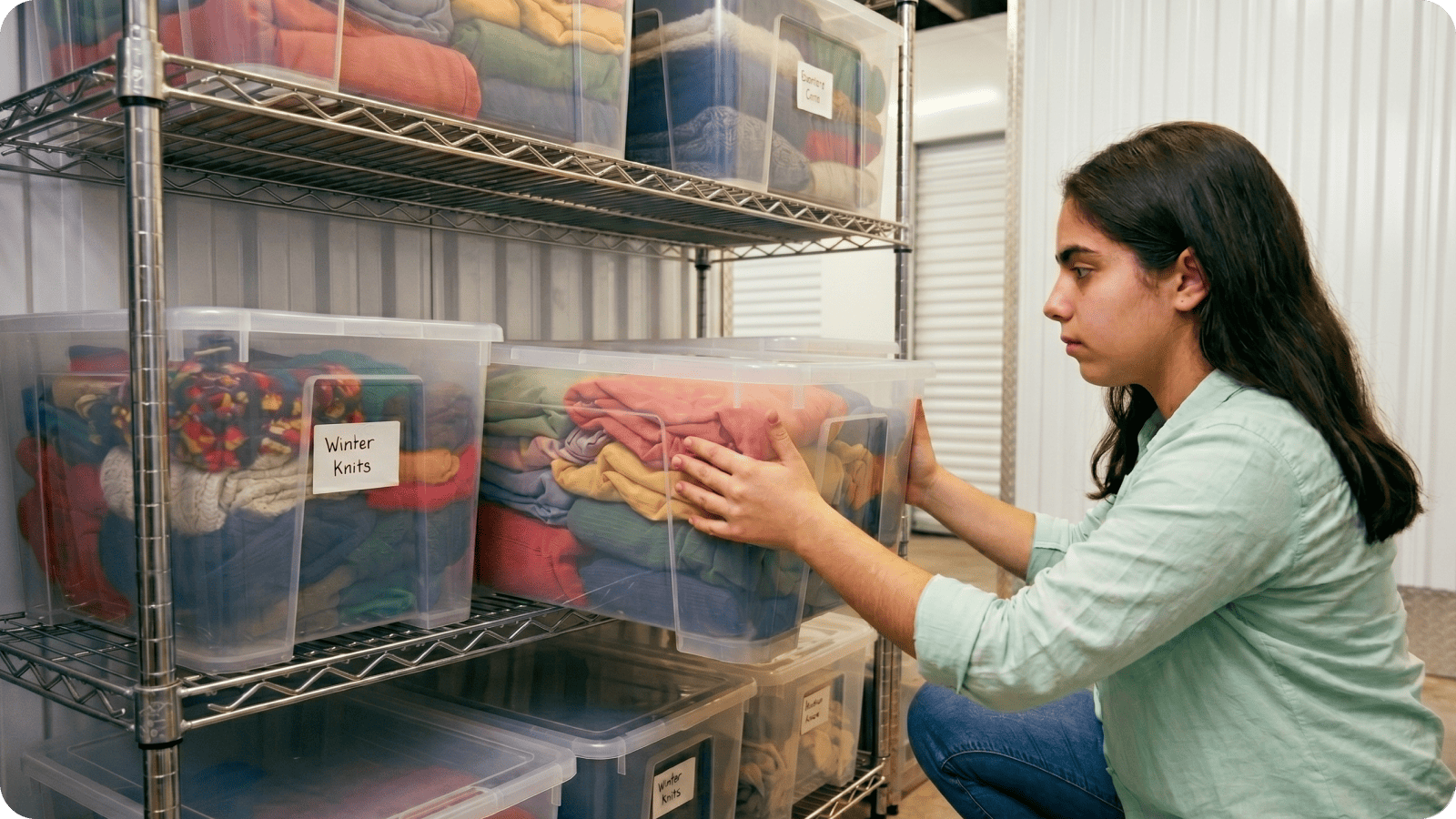
When Does Renting a Storage Unit Make Sense?
If seasonal items are taking up space you actually need to live in, a storage unit is the most practical fix available to apartment renters. You move out what doesn't belong in your apartment right now, and bring it back when the season turns. No purging items you still use. No sacrificing your bedroom closet to store a ski jacket until December.
Not sure if you actually need one? Our guide on when to use self storage covers the honest signs it makes sense and when it probably doesn't.
And if you're renting in New York specifically, this breakdown of whether you actually need a storage unit in NYC is worth a read before you commit to a unit.
How to Set Up a Storage Unit for Seasonal Rotation
Renting the unit is only the first step. How you organize it determines whether the rotation system actually works.
Follow these principles when setting up your unit:
-
Front = current season, back = off-season
Place the items you'll need next at the front of the unit. Off-season items go toward the back or on upper shelves. When it's time to rotate, you're not unloading the entire unit to get to what you need. - Keep a walking path
Don't pack wall to wall. Leave a narrow aisle down the center so you can reach items in the back without moving everything in front of them. - Use shelving if possible
Vertical space in a storage unit is often wasted. A set of freestanding metal shelves lets you stack bins safely and keeps the floor clear for larger items like luggage or sports gear. - Group by season and category
Keep all winter clothing bins together and keep holiday décor together. Don't mix categories across different zones. When you're doing a swap at 9am on a Saturday, you want to grab the right bins quickly and leave. - Label every bin before it enters the unit
An unlabeled bin in a storage unit is effectively invisible. You will not remember what's in it six months later.
A 5×5 or 5×10 unit handles most apartment renters' seasonal items comfortably. The 5×5 fits seasonal clothing, holiday décor, and small gear while the 5×10 adds room for a bike, larger sports equipment, and additional boxes.
If you're not sure what size makes sense for what you're storing, Stuf's sizing guide breaks it down by unit dimensions and what fits in each.
Step 4: How to Pack and Label Bins for Easy Rotation
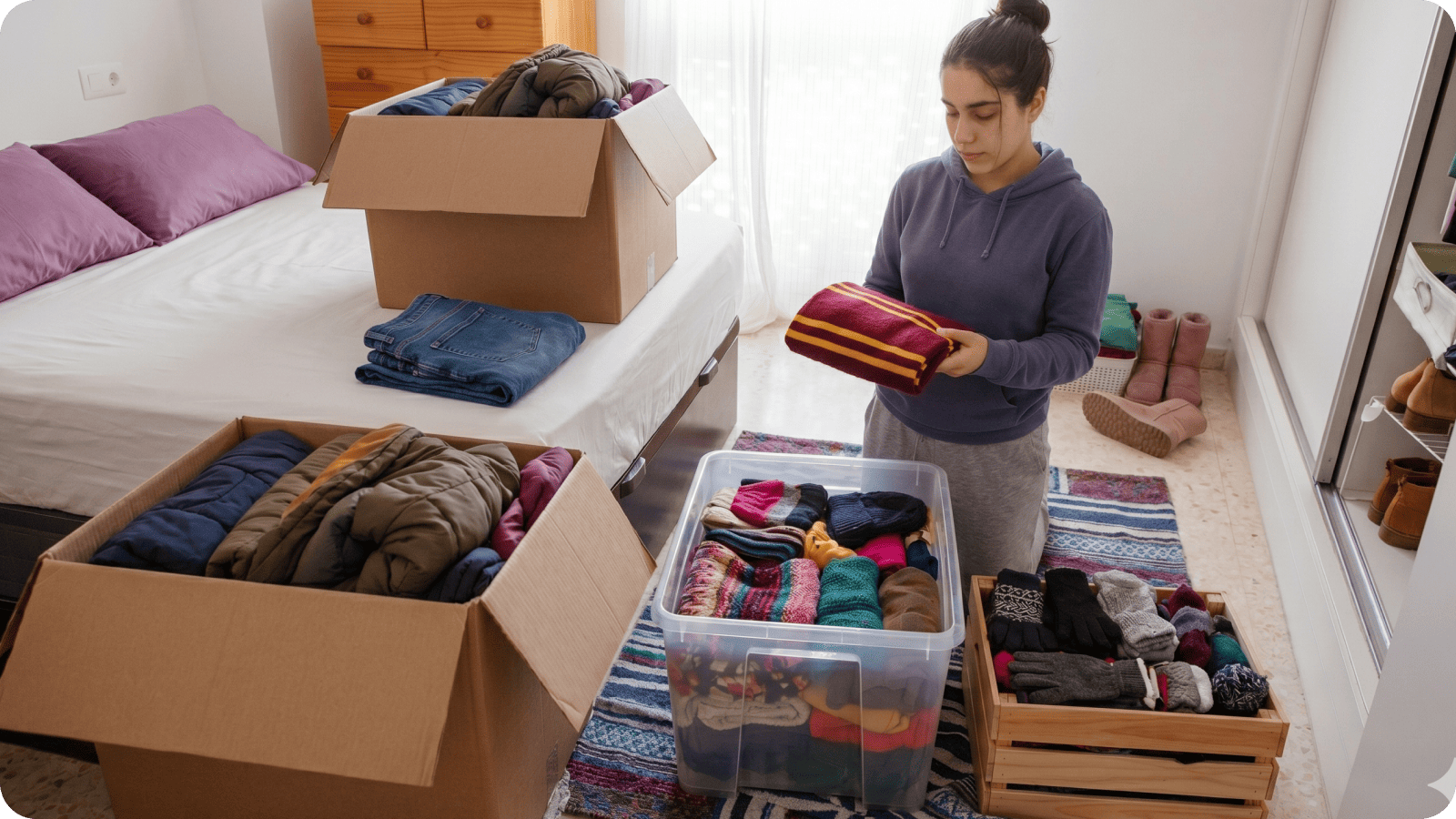
In addition to setting up your storage space properly, how you pack also determines how effective your rotation system will be. Pack well once, and every future swap will take a fraction of the time.
Here’s how to do it:
Choose the Right Storage Containers
- Clear, stackable bins (60–100L): You can see what's inside without opening them. You can also stack them without worrying about collapse
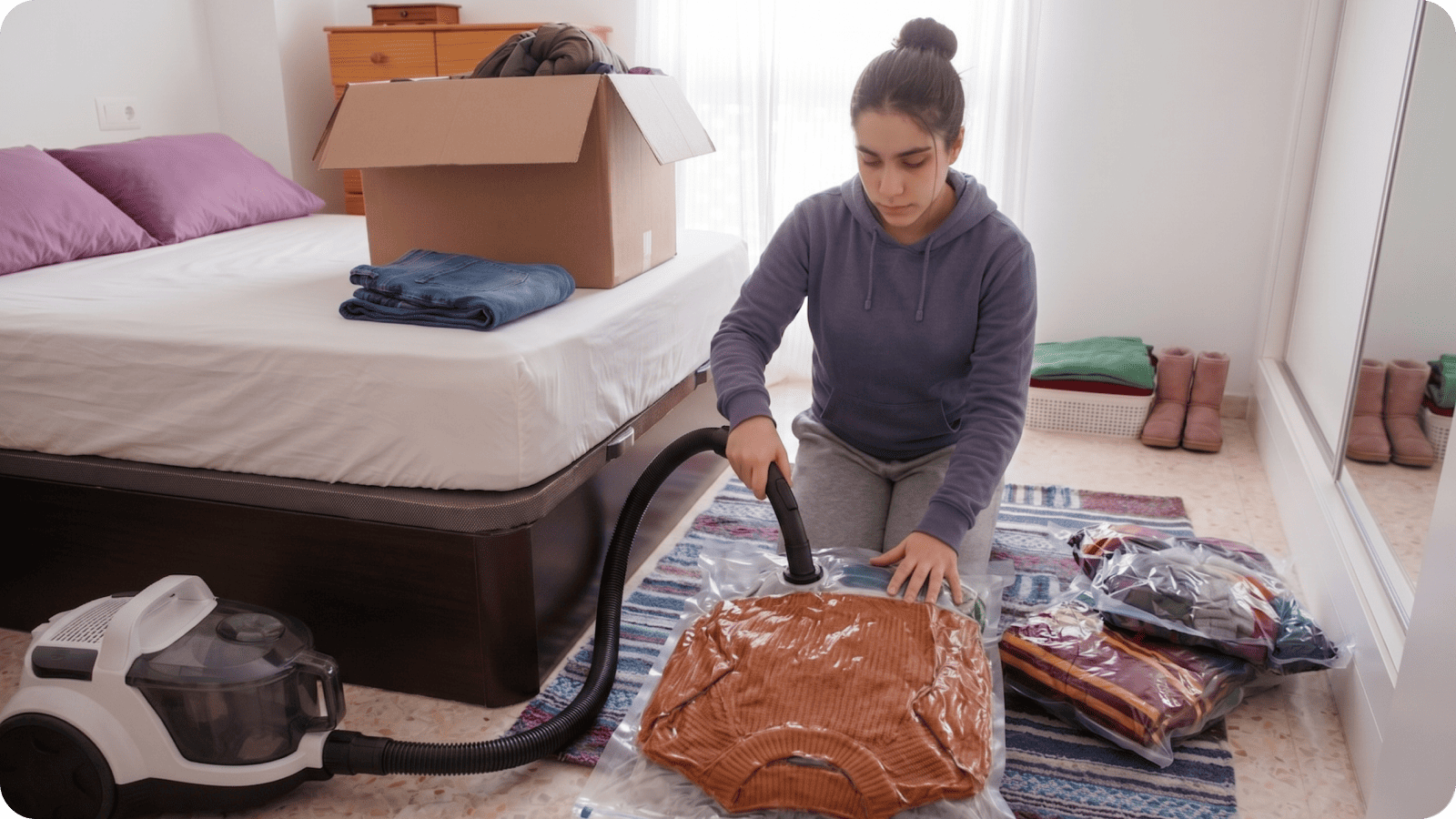
- Vacuum storage bags: They reduce bulky items like coats, comforters, and sleeping bags to a third of their size
- Wardrobe boxes: Useful for hanging garments that can't be folded without creasing
- Specialty containers: Ornament divider boxes for holiday decorations, garment bags for formal wear, moisture-absorbing packets for leather goods and shoes
- Skip cardboard: It collapses under weight, absorbs moisture, and attracts pests, none of which you want for items you'll store for months at a time
How to Label Your Containers
- Season — use color-coded tape to make this visible at a glance (for example, blue for winter, yellow for spring, red for summer, orange for fall)
- Category — a simple descriptor like "Holiday: Christmas," "Bedroom: Winter Bedding," or "Sports: Ski Gear"
- Contents summary — a short list of what's inside, written directly on the label
- Rotation date — "Stored: October 2025 | Return: April 2026"
Before sealing any bin, photograph the contents from above. Save the photos to a phone album labeled by season. This will become your instant inventory.
For a more structured digital inventory, you can try storage inventory apps like Sortly which lets you link a photo and item list to a QR code sticker on each bin. This is especially useful if you're rotating a large number of boxes.
Step 5: What to Store Each Season
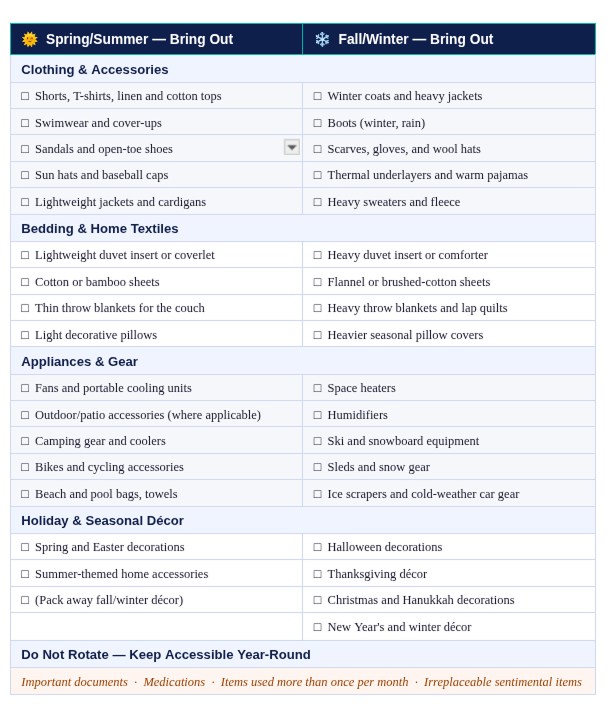
Use this as your reference guide when planning each rotation. The items listed here cover the most common seasonal categories for apartment renters.
Spring/ Summer Rotation - What to Bring Out
- Warm-weather clothing: shorts, swimwear, sandals, sun hats, lightweight jackets, linen and cotton pieces
- Bedding: lightweight duvet inserts or coverlets, cotton or bamboo sheets
- Fans and portable AC units (if applicable)
- Outdoor and recreational gear: bikes, camping equipment, beach bags, coolers
- Spring and summer décor, if applicable
For a more detailed breakdown of spring storage, especially if you're renting in New York, our guide to what to store in spring covers it by category.
Fall/ Winter Rotation - What to Bring Out
- Cold-weather clothing: coats, boots, scarves, gloves, thermal layers, warm pajamas
- Heavy bedding: flannel sheets, heavy duvet inserts, extra blankets
- Space heaters and humidifiers
- Holiday décor: Halloween, Thanksgiving, Christmas, Hanukkah, and any other seasonal decorations
- Cold-weather sports gear: skis, snowboards, ice skates, sleds
If you're not sure what to do with holiday items after the season ends, our holiday storage guide covers what to store, how to pack it, and what to handle differently.
Use this checklist as your reference for every rotation:
Step 6: The Habits That Keep Your Rotation System from Falling Apart
The hardest part of a seasonal rotation system is not building it but rather maintaining it after the first year.
Most systems fail not because they were poorly designed, but because the habits to sustain them were never established. So, here are some tips to build the habits you need to keep your seasonal storage rotation system in check all year round.
Block Your Rotation Dates on Your Calendar
Set two (or four) recurring calendar reminders today. Treat them like any other commitment. Name them something specific: "Spring Storage Swap" and "Fall Storage Swap" so they won’t be vague enough for you to ignore.
Pair each rotation with something already on your schedule. For instance, many people do their spring swap the weekend after spring season is officially announced. Similarly, the fall swap pairs naturally with the weekend before Halloween or the first cold snap of the year.
Pack Out When You Pack In
The most efficient rotation habit you can build is to pack your off-season items at the same time you’re pulling your new-season items out of storage.
This doubles your efficiency and keeps your storage unit from accumulating a mix of current and off-season items over time.
Use Each Rotation as a Declutter Checkpoint
Every time you pull items out of storage, ask one question: “Did I actually use this in the past year?” If the answer is no, it's a declutter candidate, not a rotation candidate.
Another useful rule for clothing you can use is the “one in, one out” rule. A new coat comes in this season? One older coat goes to donation. This prevents the rotation system from gradually expanding into a storage system for things you no longer use.
Our home organization guide covers how to build this kind of habit into a broader organization plan.
Put Items Back Where They Belong
If you take something out of a seasonal bin mid-season, say, you need a scarf in May, put it back before the day or week ends. Items that don't return to their designated bin are how rotation systems slowly fall apart. This rule keeps the system intact between full rotation swaps.
FAQs About Seasonal Storage Rotation
How often should I rotate my seasonal storage?
Twice a year works for most apartment renters, once in spring and once in fall. If you have a large holiday collection or gear for multiple seasonal sports, four rotations a year gives you more control. Start with two and adjust from there.
What's the difference between seasonal storage and just using storage?
The difference is intentionality and a system.
Passive storage means items go in and stay there. Seasonal storage is active. You rotate specific items on a set schedule so your home only holds what you actually need right now.
Can I set up a seasonal rotation system in a small apartment with no extra closet space?
Yes. Use under-bed storage bins and vacuum bags for clothing and bedding. For larger or bulkier items you can't fit inside the apartment at all, a nearby self-storage unit is the practical solution.
What items should I not put into seasonal storage?
Keep important documents, medications, irreplaceable items, and anything you need more than once a month in your apartment.
Do I need a climate-controlled storage unit for seasonal items?
For fabrics, leather, wood items, and electronics, yes. Heat and humidity cause real damage over months of storage. All Stuf units are climate-controlled by default. It's not an add-on or an upgrade, it's standard across many locations.
Build Your Seasonal Rotation System Today!
With a seasonal storage rotation system in place, you'll know exactly where every item is, exactly when it needs to come out, and exactly where it goes when the season ends.
The first rotation will take the most effort. After that, each swap will get faster because the system is already built.
Start with Step 1 this week. Walk through your apartment and identify what's seasonal. That single step sets everything else in motion.
When you're ready to move items out of your apartment and into a dedicated, climate-controlled space, Stuf has locations across New York, Los Angeles, San Francisco, Washington DC, and Seattle, all in accessible neighborhoods, not on the outskirts of town.
Reserve your unit in a few minutes. No long-term commitment required.

.png)
%20(1).png)
.png)