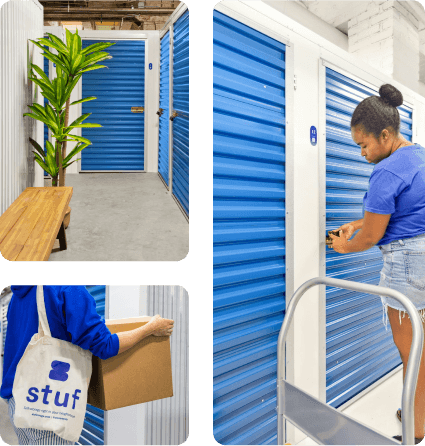


When did you last think about what's actually happening to the equipment sitting in your storage unit?
Temperature swings, humidity, and a bad padlock can quietly destroy assets most small businesses can’t afford to replace. The good news: it’s entirely preventable. This guide walks you through exactly how.
Protecting business equipment in storage comes down to five things:
- Categorizing your equipment by risk level
- Choosing climate-controlled storage for sensitive items
- Packing each equipment type correctly
- Securing against theft with the right locks and access controls
- Insuring stored equipment with the right policy
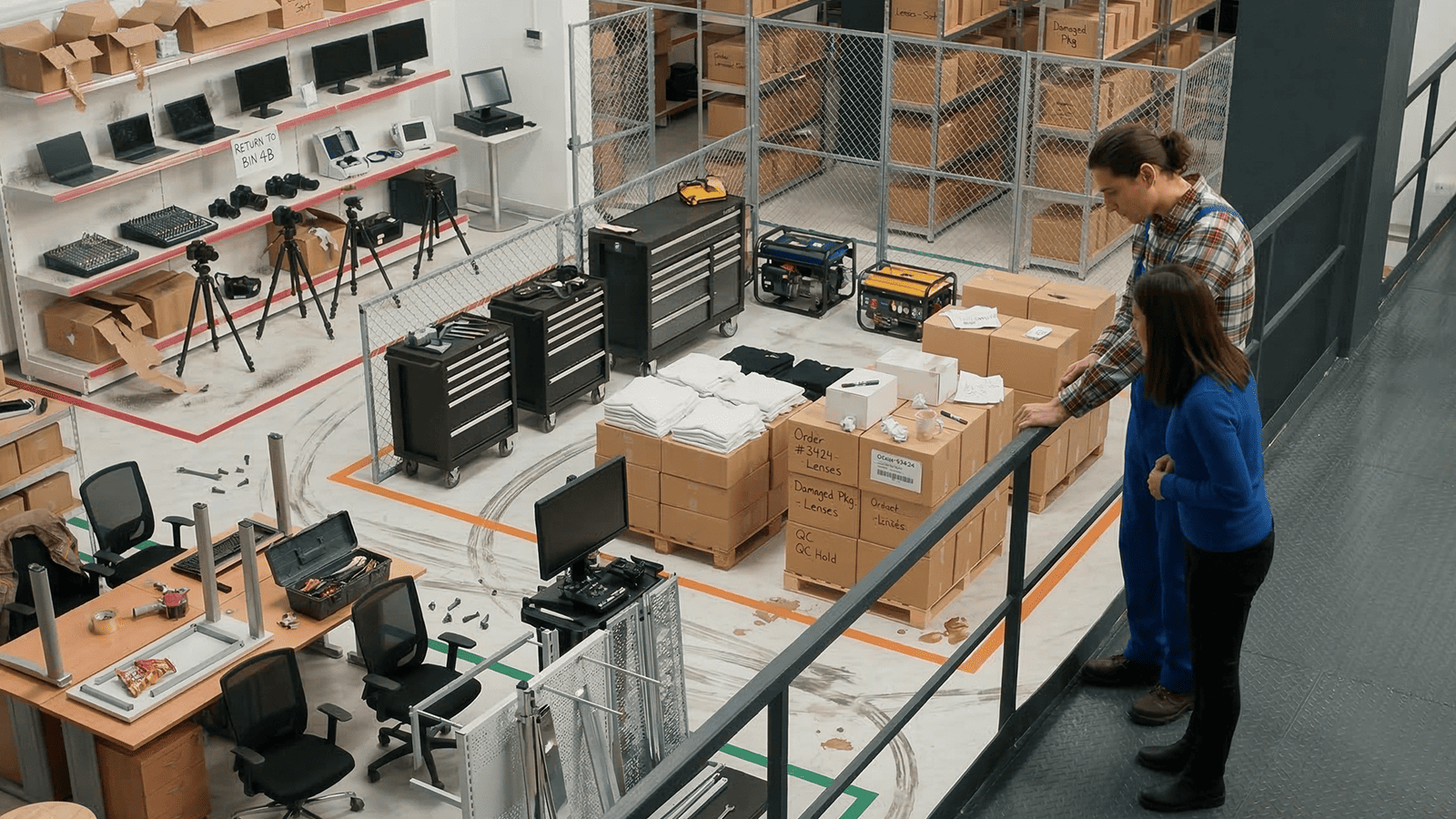
Categorize Your Business Equipment Before You Store Anything
Different kinds of business equipment carry varied risk. Knowing the difference will affect every decision that follows including the type of unit you rent, how you pack, and how much security you need.
Categorize Your Equipment by Risk Level
-
High-risk equipment: This includes anything with electronics or sensitive components. Think laptops, monitors, cameras, audio equipment, point-of-sale systems, and medical or diagnostic devices.
These are vulnerable to heat, humidity, and temperature fluctuations. They're also the most expensive to replace. - Medium-risk equipment: This type covers tools, small machinery, branded merchandise, and physical inventory. They’re more durable but still need proper packing and a secure unit to prevent damage or theft.
- Lower-risk items: These often include office furniture, display fixtures, and non-sensitive gear that can generally tolerate standard storage conditions. Although organization still matters for these items for easy access and use.
Once you know what category your equipment falls into, you know what to prioritize. For example, if you have more high-risk items going into storage, you might have to opt for climate-controlled storage units with 24/7 security or surveillance.
On the other hand, if you only have a few boxes or sets of lower-risk items, you can rent small to medium standard storage units.
Pro tip: Before anything goes into the unit, photograph each item and record serial numbers. It takes 20 minutes and it’s the single most useful thing you can do for insurance purposes if something goes wrong.
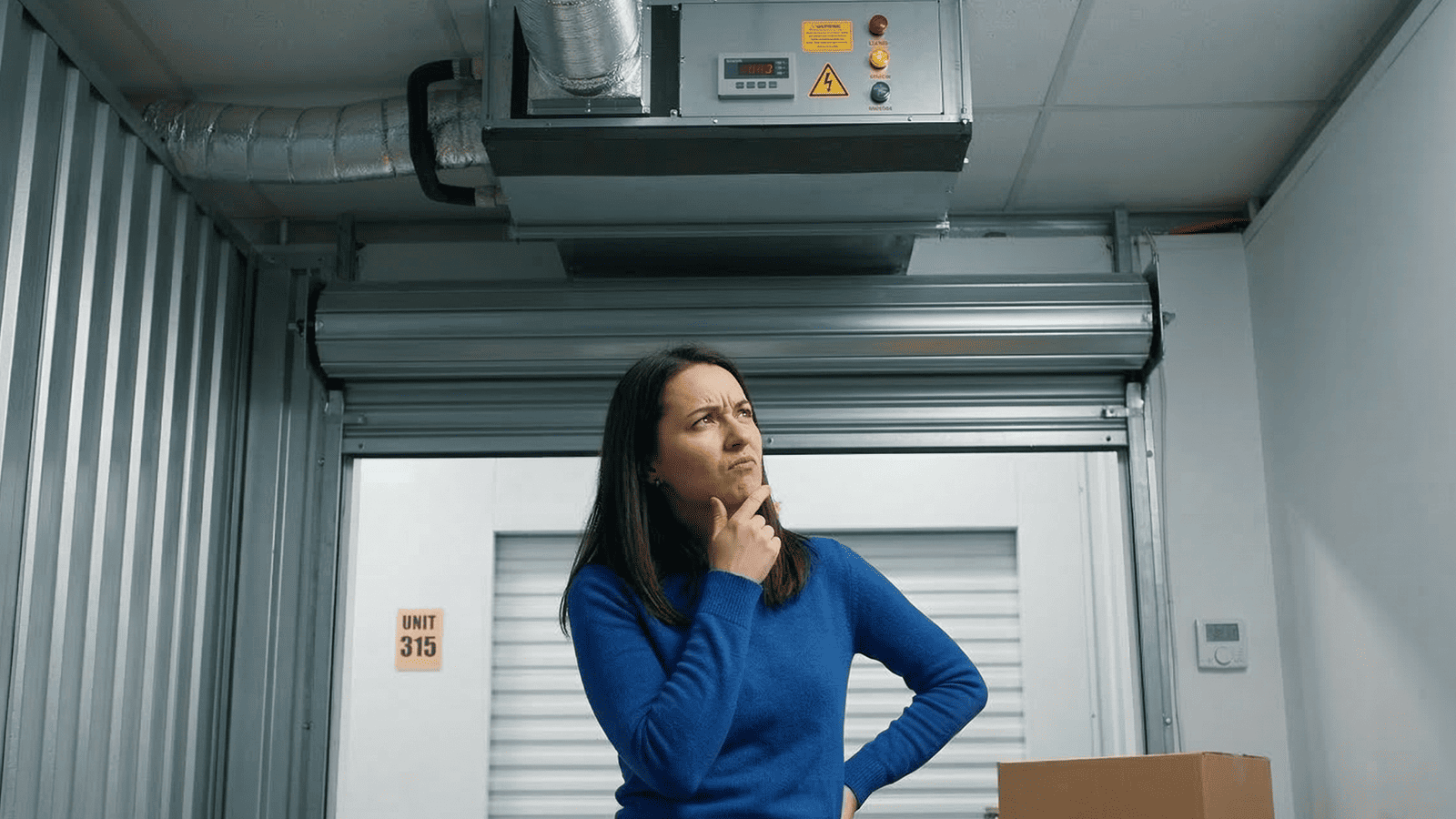
Climate-Controlled vs. Standard Storage: Which Does Your Business Equipment Need?
The type of unit you choose has a direct impact on whether your equipment comes out in good condition. And the two most important features to be considered here are climate control and security.
Do You Need Climate-Controlled Storage for Your Business Equipment?
If your equipment has a circuit board, a screen, or moving parts sensitive to moisture, yes, you need climate-controlled storage.
Generally, it’s recommended to store electronics in HVAC-regulated environments kept between 50°F and 80°F, with humidity control as moisture is one of the biggest causes of electronic damage in storage.
Standard storage units don't regulate either. Additionally, the inside of a non-climate-controlled unit can reach temperatures 30 degrees higher than the outside temperature in the summer in certain regions.
Even short exposure to high humidity and high temperatures can cause moisture uptake inside components, leading to corrosion, electrical leakage, and material deterioration.
Here's a practical breakdown of what needs climate-controlled storage and what doesn't:
|
What Business Equipment Should be in Climate-Controlled vs Standard Storage
|
|
|---|---|
|
Needs Climate-Controlled
Storage |
Can Handle Standard Storage (Short Term)
|
| Laptops, computers, monitors, and servers |
Power tools and hand tools (cleaned and dried before storing) |
| Cameras and audio/visual equipment | Metal shelving, display racks, and fixtures |
| Point-of-sale systems and tablets | Plastic bins and non-sensitive containers |
| Instruments, medical devices, or any precision equipment |
Outdoor or job-site equipment built to handle the elements |
| Instruments, medical devices, or any precision equipment |
|
If you're storing a mix of both, we still recommend you choose climate-controlled. While the cost of a climate-controlled unit is 20% to 50% more than a standard unit, it is still far smaller than the cost of replacing damaged equipment.
For a deeper look at how to decide, check out our guide: Climate-Controlled vs. Standard Storage Units for business storage.
What Security Features Actually Matter in a Business Storage Facility
Climate control protects your equipment from the environment but security protects it from everything else.
When evaluating a facility, these are the features you should take note of:
- 24/7 camera surveillance: A well-placed camera network covering entry points, hallways, and unit areas serves two functions: it discourages unauthorized activity, and it provides recorded footage to review and act on when needed.
However, these cameras are only useful if they run continuously and are positioned without blind spots
Pro tip: Ask facilities about both and try to locate these cameras yourself when visiting. - Keyless or app-based unit access: Keyless or mobile credential systems are particularly effective against unauthorized entry. Access permissions are all stored and managed in your smart device.
- Individual unit alarms: Individual unit alarms add a direct layer of protection specific to your space. If someone tampers with your unit specifically, you want an alert triggered, not just a camera that may or may not be monitored in real time.

When evaluating a facility, treat security as a checklist, not an assumption. Remember, a clean-looking facility isn't the same as a secure one. So, it’s best to ask about each of these features directly before signing.
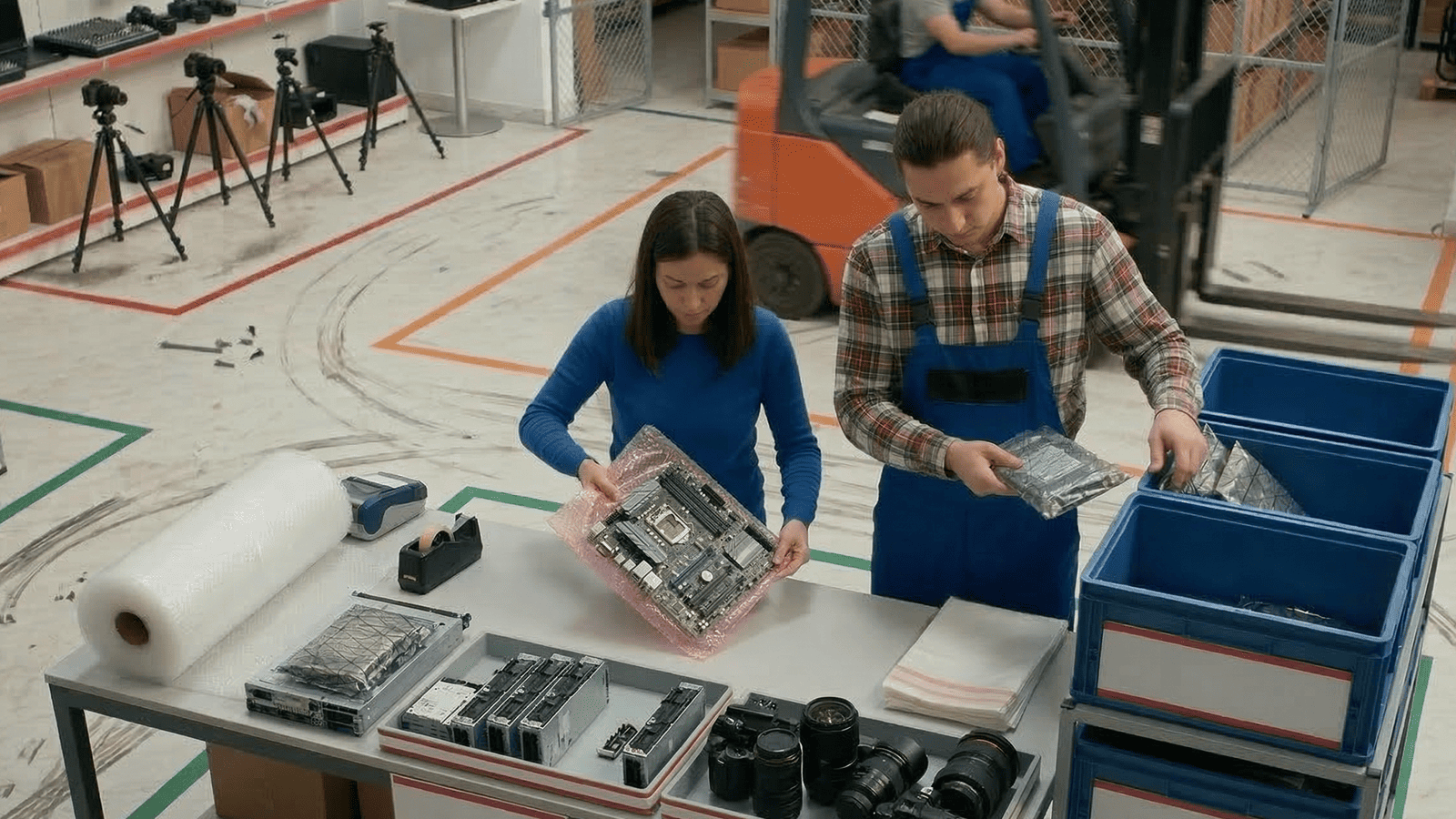
How To Properly Store Business Equipment
How you prepare and pack your equipment before it goes in matters just as much as choosing the right self storage unit. Here's how to do it right, broken down by equipment type.
How to Store Electronics and Tech Equipment
Electronics are the most unforgiving items to store incorrectly. Heat degrades internal components while humidity causes corrosion. Static electricity during packing can also silently damage circuit boards. Here's the correct approach:
Hot to Prepare Your Electronics Before Packing:
- Back up your data first: Before a laptop, computer, or tablet goes into storage, back up everything to an external drive or cloud service. This is non-negotiable.
- Power down completely and remove batteries: Batteries left inside devices during storage can leak or degrade. Remove them and store batteries separately in a protective case, charged to around 50% to preserve their lifespan.
- Label and photograph cords before disconnecting. Take a photo of how cords are connected to each device before unplugging anything. Then, bundle each set of cords with its corresponding device, not in a separate box.
How to Properly Pack Electronics for Storage
- Use anti-static packing materials: Avoid standard bubble wrap that can generate static electricity, which is harmful to electronics. Better yet, use the original packaging if you still have it. These were designed with the exact dimensions and protective materials specifically for that device.
- Never wrap electronics in plastic. Plastic traps moisture and creates the conditions for mold and mildew. Use breathable materials like anti-static foam or cotton covers for larger items.
- Add silica gel packets to every box. Silica gel absorbs excess moisture inside the box, providing a secondary line of defense against humidity. Place them inside the box, but not in direct contact with components.
- Store screens vertically, not flat. Monitors, flat-screen displays, and laptops should always be stored upright. Storing them flat puts pressure on the screen and risks cracking.
- Keep electronics off the floor. Place boxed electronics on shelving or pallets to keep them elevated and away from any ground-level humidity.
How to Store Tools and Specialty Equipment
Tools are more durable than electronics, but they're not immune to storage damage. Some of the most common challenges you face with these are rust, corrosion, and physical damage from poor packing.
Here are the best tips to protect them in storage:
- Clean everything before it goes in: Tools should be wiped down to remove dirt, dust, grease, and debris. They should also be 100% dry before being put in storage to prevent rust from developing. This is especially important for cutting tools, drill bits, and any metal surfaces that see regular use.
- Use original cases for power tools: Power tools typically come in hard plastic cases designed specifically for them. Use these whenever possible, as they keep the tool and all its parts together and protected from impact and moisture.
- Remove and store batteries separately: Charge batteries to around 50% before storage and keep them in a protective case. Storing batteries fully charged or fully depleted shortens their lifespan significantly.
- Protect metal surfaces from rust: Apply a rust-inhibiting coating to metal surfaces and use silica gel packets to absorb moisture in storage containers.
How to Store Business Inventory
Inventory is often a business's most liquid asset and one of the most commonly mishandled items in storage. The priority here is preservation, organization, and accessibility.
- Sort and label before storing: Organize inventory by product type, SKU, or season before anything goes into the unit. Use clearly labeled bins or boxes, and keep a digital inventory list that mirrors exactly what's in the unit.
- Use uniform, stackable bins: Uniform bins stack more stably, use vertical space more efficiently, and make the unit easier to navigate. Clear bins are also best so you can see what's inside without opening them
- Account for product sensitivity: Not all inventory stores the same way. For instance, cosmetics, food products, and anything with active ingredients are temperature-sensitive. Thus, they should always go into climate-controlled units. Apparels and fabric products, on the other hand, need specific containers such as cotton bags or breathable containers to prevent degradation.
- Keep your bestsellers accessible: If you're pulling from your storage unit regularly to fulfill orders, store your highest-turnover inventory closest to the door. Put slow-moving or seasonal stock toward the back.
- Elevate everything off the floor: Use pallets or shelving to keep inventory boxes off the ground. Even in climate-controlled units, floor-level moisture is a real risk, especially in urban facilities with underground or lower-floor units.
How to Store Office Furniture and Equipment
Desks, chairs, shelving, and other office furniture are lower-risk than electronics or inventory, but they can still be damaged by poor packing and storage technique. Here are a few steps to follow before storing them:
- Disassemble where possible: Break down desks, shelving units, and table legs before storing. Disassembled furniture takes up significantly less space, reduces the risk of structural damage from pressure or shifting, and is easier to protect during transport and storage. Then, keep all hardware in a labeled zip-lock bag taped directly to the corresponding piece.
- Protect surfaces from scratches. Wrap tabletops, glass surfaces, and wooden desktops in moving blankets or furniture pads.
- Cover upholstered furniture with breathable covers: Fabric chairs and sofas should be covered with breathable cotton covers rather than plastic wrap to avoid trapping moisture. If storing long-term, add a moisture absorber nearby.
- Store wooden furniture away from direct contact with concrete floors: Wood absorbs moisture from concrete over time. Place wooden items on pallets or furniture sliders, even inside a climate-controlled unit.
How to Store Branded Materials and Signage
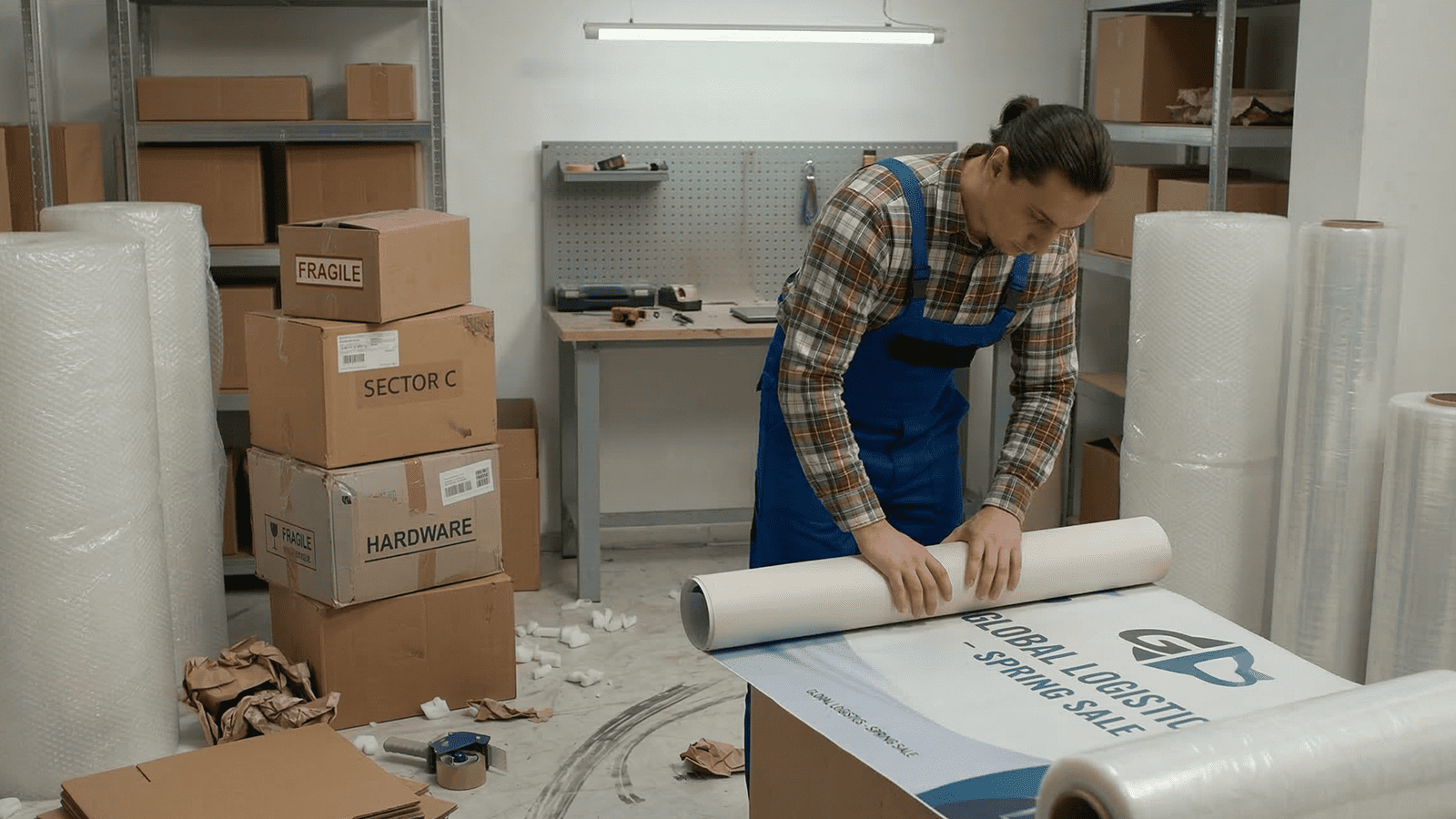
This category is easy to overlook but commonly stored. This includes banners, foam boards, display signage, branded packaging, and event materials.
- Roll, don't fold, large banners and printed materials: Roll large-format prints and banners around a cardboard tube and store them horizontally in a protective sleeve or PVC pipe to prevent permanent creases.
- Store flat signage vertically: Foam boards, acrylic panels, and rigid signage should be stored standing upright, not stacked flat.
- Keep branded packaging in sealed, moisture-proof bins: Cardboard packaging boxes, tissue paper, and branded mailers absorb humidity quickly. Store them in sealed plastic bins, not cardboard boxes, to keep them print-ready.
How to Organize a Business Storage Unit for Easy Access
How you arrange your storage unit affects how you use your unit overall. So, here are a few things that can make a difference in keeping it neat and your things easy to access:
- Use shelving units: Keeping boxes off the floor protects against moisture at ground level and makes everything more accessible. Collapsible metal shelving works well and doesn't take up much space when not in use.
- Leave a clear aisle: If you need to access your unit regularly, don't block the path to frequently used items with things you rarely need. Store high-access items near the front and long-term items toward the back.
- Label boxes on the outside: Don't rely on memory. For long-term storage, consider taping a photo of the contents on the outside of each box.
-
Create a simple inventory list: Write down everything that goes in including equipment name, quantity, and serial numbers if relevant. Store this list digitally, not inside the unit.
What Not to Store in a Business Storage Unit
Putting the wrong items in a unit creates liability, violates facility policies, and can damage everything around them. As a general rule, avoid storing:
- Flammable or hazardous materials - This includes gasoline, propane tanks, paint, solvents, and chemical supplies. They're a fire and safety risk to the entire facility.
- Cash, negotiable documents, or irreplaceable originals - A storage unit is not a safe. Original contracts, deeds, certificates, and large amounts of cash should be kept in a bank vault or fireproof safe at your primary location.
- Perishable goods and food products - Anything that can spoil attracts pests and creates health hazards.
- Illegal or regulated items - Storing controlled substances, unlicensed weapons, or counterfeit goods in a storage unit is illegal regardless of whether the facility knows about it.
- Personal documents with sensitive information - Tax records, employee files, client contracts, and anything containing personally identifiable information shouldn't sit in a storage unit long-term.
How to Protect Business Equipment from Theft in Storage
Reports and studies cite varied incident numbers of storage theft all across the US. For instance, in Nashville, authorities report that 75% of the 100 facilities they checked received calls regarding theft, robberies, and holdups.
In Portland, authorities received around 1800 storage unit theft reports within 3.5 years, averaging about 10 thefts per week.
The good news is that most storage theft is opportunistic. While a good storage facility handles a lot of the security heavy lifting, there are steps you can take to make a bigger difference both in deterring theft and in recovering your equipment quickly if something does go wrong.
Here are some tips to consider:
Use the Right Lock on Your Unit
Invest in a high-quality disc lock or cylinder lock. These are significantly more resistant to bolt cutters and tampering than standard padlocks. Avoid combination locks as they offer convenience at the cost of security.
Don't Advertise What's Inside
Thieves make fast decisions based on visible cues. So, don't label boxes with brand names, model numbers, or anything that signals high resale value like "Sony camera equipment" or "MacBook Pro x3." Use neutral, generic labels instead.
Document Everything Before It Goes In
Before storing any equipment, photograph each item and record its serial number, make, model, and approximate value. Store this inventory digitally in a cloud drive or spreadsheet, not inside the unit itself.
Most storage theft perpetrators are not caught, and even when they are, prosecution is inconsistent which makes your own documentation the most reliable tool you have. A detailed record of serial numbers and photos will allow a police report to move forward and an insurance claim to be processed without dispute.
Consider GPS Tracking for High-Value Equipment
For cameras, laptops, power tools, or any high-value gear that moves in and out of storage regularly, a GPS tracker is worth the investment. Modern trackers send instant alerts if equipment leaves a designated zone without authorization. They also provide real-time location data that law enforcement can act on quickly.
Choose a Facility Whose Access System Closes the Right Gaps
Facilities that rely on shared gate codes are particularly vulnerable. This is especially when the same code circulates among several employees.
This makes facilities with individual, account-based digital access meaningfully more secure. Access is tied to a verified identity, not a code that can be passed along, photographed, or guessed.
At Stuf Storage, units are keyless and access is tied directly to your account credentials. For business owners who occasionally need a staff member or contractor to access a unit, permissions can be managed at the account level without handing over a key that can't be taken back.
Combined with 24/7 camera surveillance and facilities embedded inside active commercial buildings, it addresses several of the vulnerabilities that standalone drive-up facilities can't easily resolve.
Don't Skip Business Equipment Insurance for Stored Items
It’s easy to assume that your existing policy covers everything you own, including your equipment in storage, but it often doesn’t.
Commercial property insurance typically excludes tools and equipment stored more than 100 feet from your primary business premises. And even when off-site coverage exists, most policies cap it at around 10% of your total property limit, which may fall well short of what your stored equipment is actually worth.
The fix most business owners need is inland marine insurance or warehousemen’s legal liability insurance.
Inland marine insurance is specifically designed for equipment kept or transported away from your main location. Warehousemen's legal liability insurance covers damage or loss that occurs while goods are in the care of a third-party storage operator.
Additionally, before storing anything significant, call your broker and ask directly: "Does my current policy cover equipment in a third-party storage unit, and up to what limit?" Don't assume. One phone call is significantly cheaper than an uncovered claim.
How Often Should You Check On Stored Business Equipment?
A quarterly visit, even just 20 to 30 minutes, is enough to catch problems before they become expensive ones.
During each check-in, look for early signs of moisture or condensation, check that stacks are stable and nothing has shifted, and confirm the lock is fully engaged and undamaged. Update your inventory list any time something goes in or comes out.
Use check-ins to also reassess what's actually in there. If your unit is consistently overcrowded, you can upgrade. This often costs less than the accidental damage that happens when you're working in a cramped space.
Store It Right And It'll Be There When You Need It
Protecting business equipment in storage comes down to four decisions: choosing the right unit, packing correctly, securing against theft, and making sure you're insured. Get those right, and your equipment comes out the same way it went in.
If you're looking for a secure, climate-controlled storage unit built for urban business owners, Stuf Storage has flexible unit sizes, keyless access, and locations across the city, so your equipment stays protected and accessible whenever you need it.
Find secure business storage units near your you now.
FAQs
-
Does business insurance cover equipment in a storage unit?
Not automatically. Most commercial property insurance policies exclude equipment stored more than 100 feet from your primary business premises. Even when off-site coverage exists, it's often capped at 10% of your total property limit.
-
Do I need climate-controlled storage for electronics?
Yes. Electronics should be stored in environments kept between 50°F and 80°F with active humidity control. If your equipment has a circuit board or a screen, climate-controlled storage is non-negotiable.
-
What type of lock should I use on a business storage unit?
Use a disc lock or cylinder lock. Both are significantly more resistant to bolt cutters than standard padlocks, which are the most common target in storage unit break-ins. Avoid combination locks. They prioritize convenience over security, which is the wrong trade-off when storing business equipment.


.png)
%20(1).png)